A ring is the most personal piece of men’s jewelry and the one most likely to be worn every day for years. Sterling silver is a good metal for that job: it is substantial, it can be resized and re-polished, and it ages gracefully. The decisions that matter are the style, the band width in millimeters, the profile of the band, and the size. This guide covers each, in the order to make them.
Key takeaways
- 5 mm to 7 mm is the everyday band width for most men’s hands; 3 mm to 4 mm reads slim, 8 mm and up reads bold.
- Choose a comfort-fit (rounded inside) band for daily wear; it slides over the knuckle more easily and feels better.
- Sterling scratches and tarnishes cosmetically; both are reversible. Brushed and oxidized finishes hide wear best.
- Unlike tungsten or titanium, a silver ring can be resized, usually by one to two sizes either way.
- Wide bands (6 mm and up) fit tighter than narrow ones: go up a half size.
Buying a ring as a gift?
An adjustable ring needs no size; for a sized ring, there are six quiet ways to find his.
In this guide
- Ring styles for men
- Band width
- Band profile: comfort fit vs. flat
- Finishes
- Which finger
- What daily wear does to a silver ring
- Sizing basics
- Quality checks before you buy
- FAQ
1. Ring styles for men
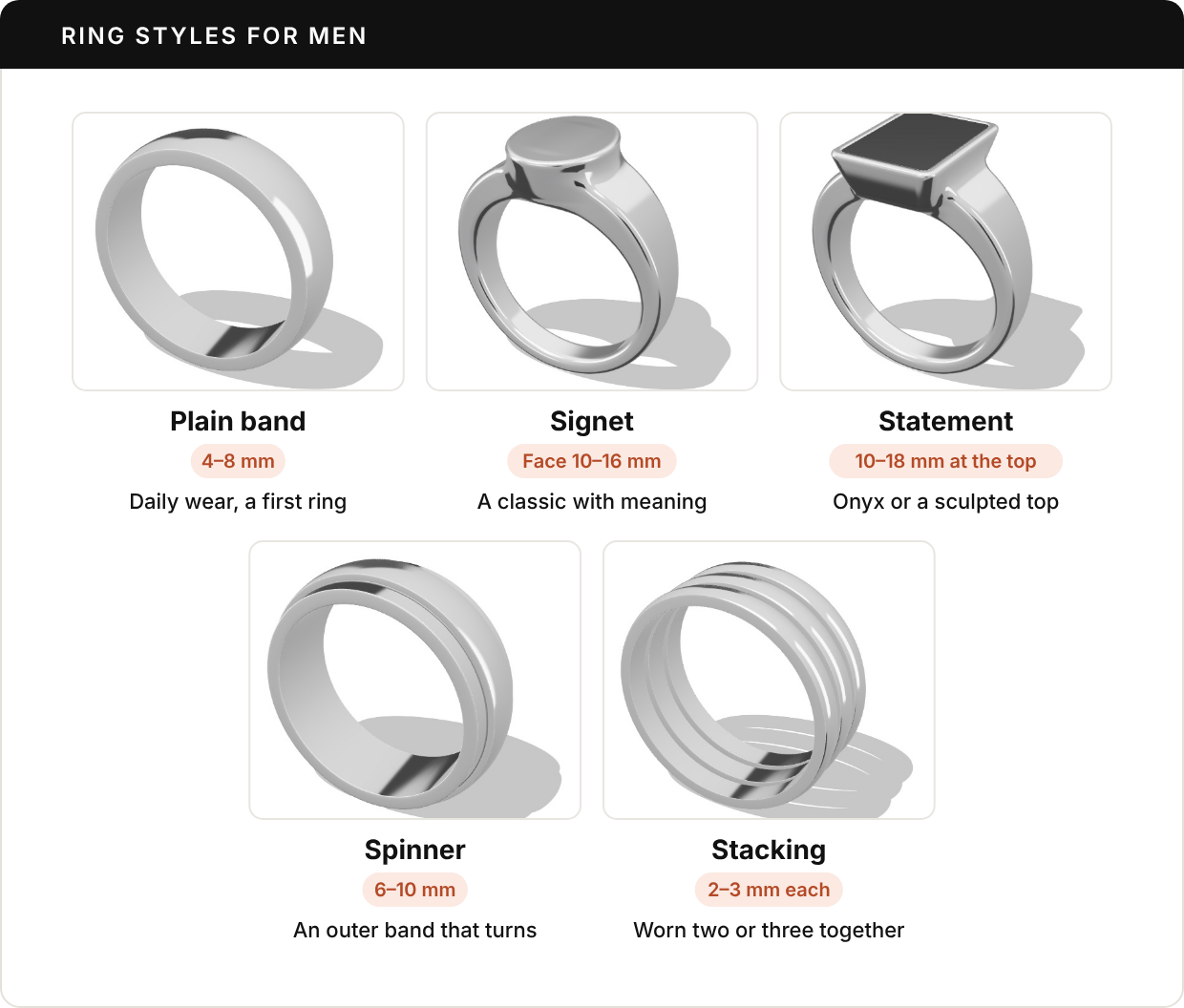
| Style | What it is | Best for | Typical width |
|---|---|---|---|
| Plain band | What it isA simple ring with no stone or motif; polished, brushed, or hammered | Best forDaily wear, a first ring, wedding bands | Typical width4–8 mm |
| Signet | What it isA band with a flat face (oval, cushion, round, or square), usually engraved | Best forA classic with personal meaning; see our signet ring guide | Typical widthFace 10–16 mm, band 3–5 mm |
| Statement | What it isA larger ring with a stone (onyx, tiger’s eye, turquoise) or a sculpted motif | Best forWorn as the focus of the hand; occasional or daily | Typical width10–18 mm at the top |
| Spinner | What it isA band with an outer ring that rotates around an inner one | Best forMen who fidget; a comfortable daily ring | Typical width6–10 mm |
| Figurative | What it isSkulls, animals, crosses, and similar carved designs, often oxidized | Best forA deliberate style choice; usually heavier | Typical widthVaries |
| Stacking | What it isThin bands designed to be worn two or three together | Best forAdding interest without a single big ring | Typical width2–3 mm |
For a first ring, a plain band or a signet is the safe choice. Both work with everything, both are easy to size, and both look better as they age. Stone rings need a little more thought: softer stones (turquoise, malachite) scratch and chip in daily wear, while onyx, tiger’s eye, and hematite hold up well.
2. Band width
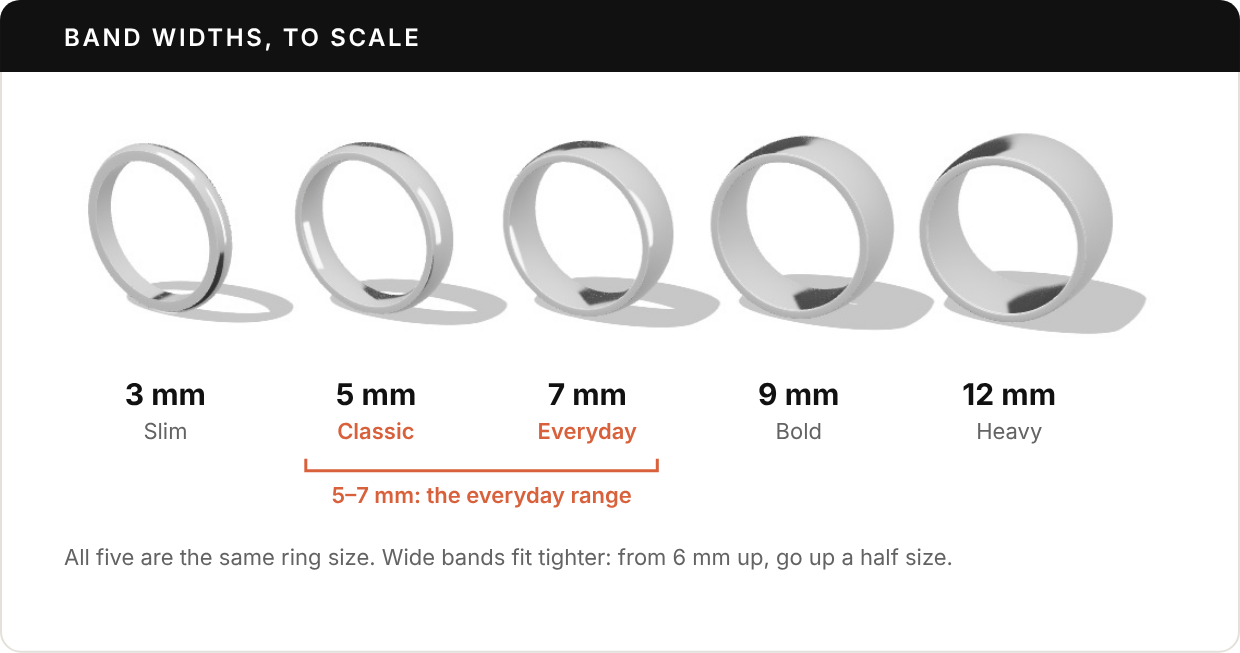
Width is listed in millimeters and it is the single biggest factor in how a ring reads on the hand. A wider band is also heavier and sits tighter, which affects sizing.
| Width | How it reads | Suits |
|---|---|---|
| 2–3 mm | Slim, discreet | Stacking rings, smaller hands, pinky rings |
| 4–5 mm | Classic; the traditional wedding band width | Most hands; a ring you forget you are wearing |
| 6–7 mm | Substantial without being heavy | The everyday range for medium and large hands |
| 8–10 mm | Bold; clearly a piece of jewelry | Large hands, statement bands, index-finger rings |
| Over 10 mm | Heavy; limits finger movement | Occasional wear, signets and statement rings |
Look at your fingers rather than a rule: long fingers carry wide bands easily, shorter fingers look best at 4 mm to 6 mm. If you are unsure, 5 mm or 6 mm is hard to get wrong.
3. Band profile: comfort fit vs. flat
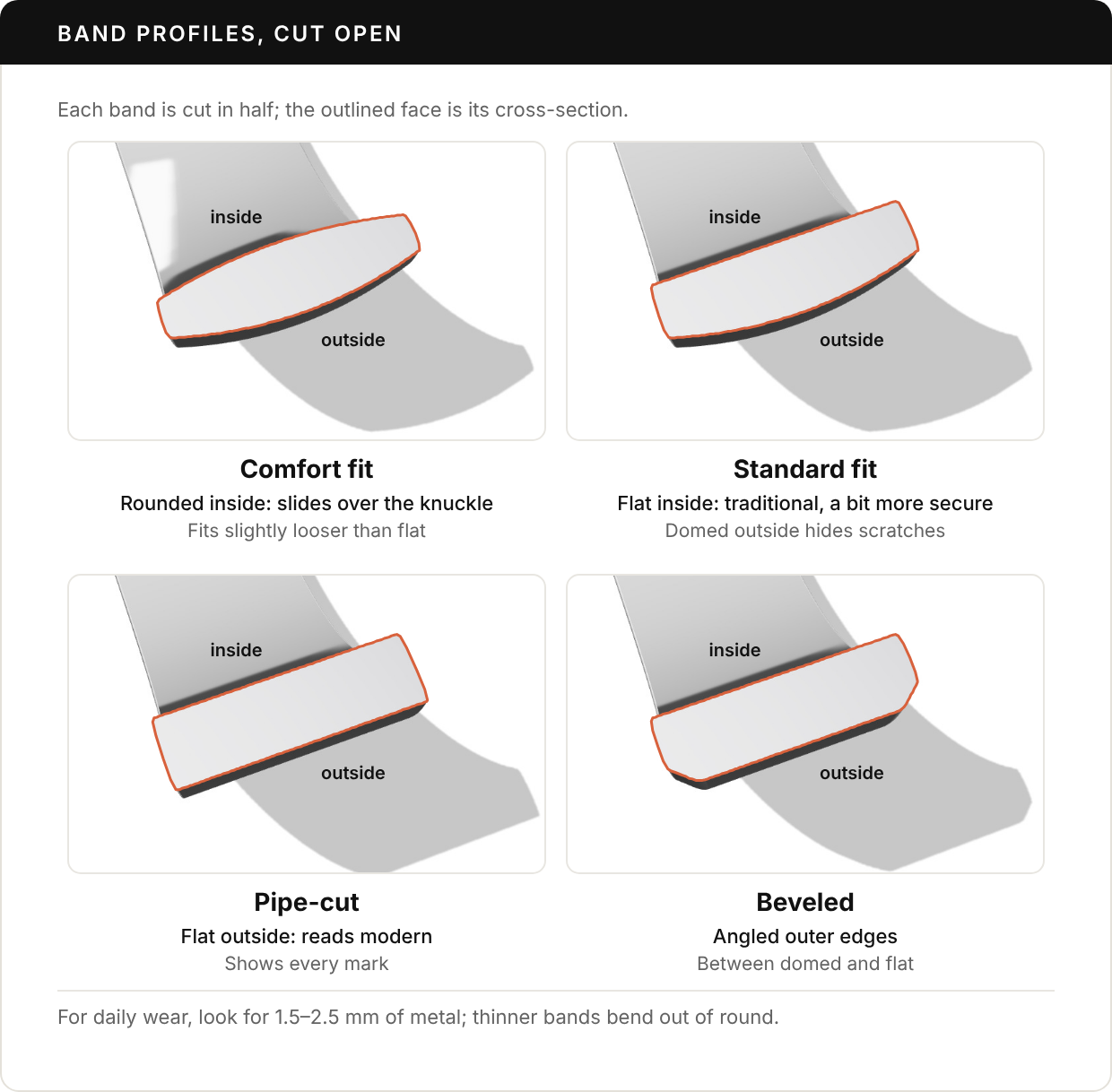
The profile is the cross-section of the band. It affects comfort more than looks.
- Comfort fit: the inside of the band is rounded (domed), so less metal touches the finger. It slides over the knuckle more easily and is noticeably more comfortable on bands 5 mm and wider. It also fits slightly looser than a flat band of the same marked size, which is why some jewelers suggest going down a quarter size in comfort fit.
- Standard (flat) fit: the inside is flat, so the whole width sits on the finger. Traditional, slightly more secure, and the norm on thin bands where comfort fit makes no difference.
- Outside shape: domed (rounded outside) reads classic and hides scratches better; flat (pipe-cut) reads modern and shows every mark; beveled edges split the difference.
Band thickness matters too. Look for 1.5 mm to 2.5 mm of metal thickness on a daily-wear sterling band; thinner bands bend out of round and are harder to resize.
4. Finishes
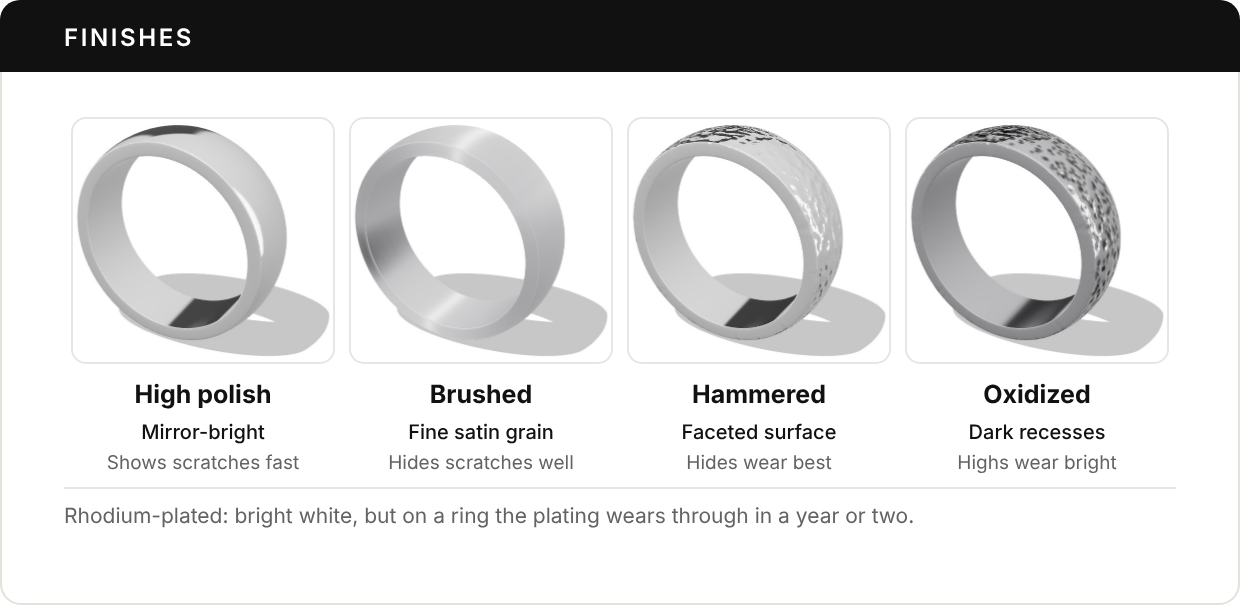
| Finish | Look | How it wears |
|---|---|---|
| High polish | Mirror-bright | Shows scratches within weeks, then settles into a soft sheen; easily restored |
| Brushed / satin | Matte with a fine directional grain | Hides scratches well; the brushed texture polishes smooth over years |
| Hammered | Faceted, hand-worked surface | Hides wear best of all; every mark blends in |
| Oxidized / antiqued | Darkened recesses with bright high points | The dark finish wears off high spots over time, which is the intended effect; avoid dip cleaners |
| Rhodium-plated | Bright white, tarnish-resistant | Plating wears through on rings faster than on chains because of constant friction; needs re-plating every year or two |
5. Which finger
In the United States there are only two conventions with real weight: a wedding band on the left ring finger, and a signet traditionally on the pinky. Everything else is preference. Practical notes: the index finger shows a ring off and suits wider bands; the middle finger balances the hand and takes a bold ring well; the pinky suits slim bands and signets but needs careful sizing because the knuckle and base are close in size; the thumb can carry a wide band, which gets knocked often. Wear fewer, better rings rather than one on every finger, and keep the total to two or three across both hands unless rings are your whole look.
6. What daily wear does to a silver ring
Be realistic about three things.
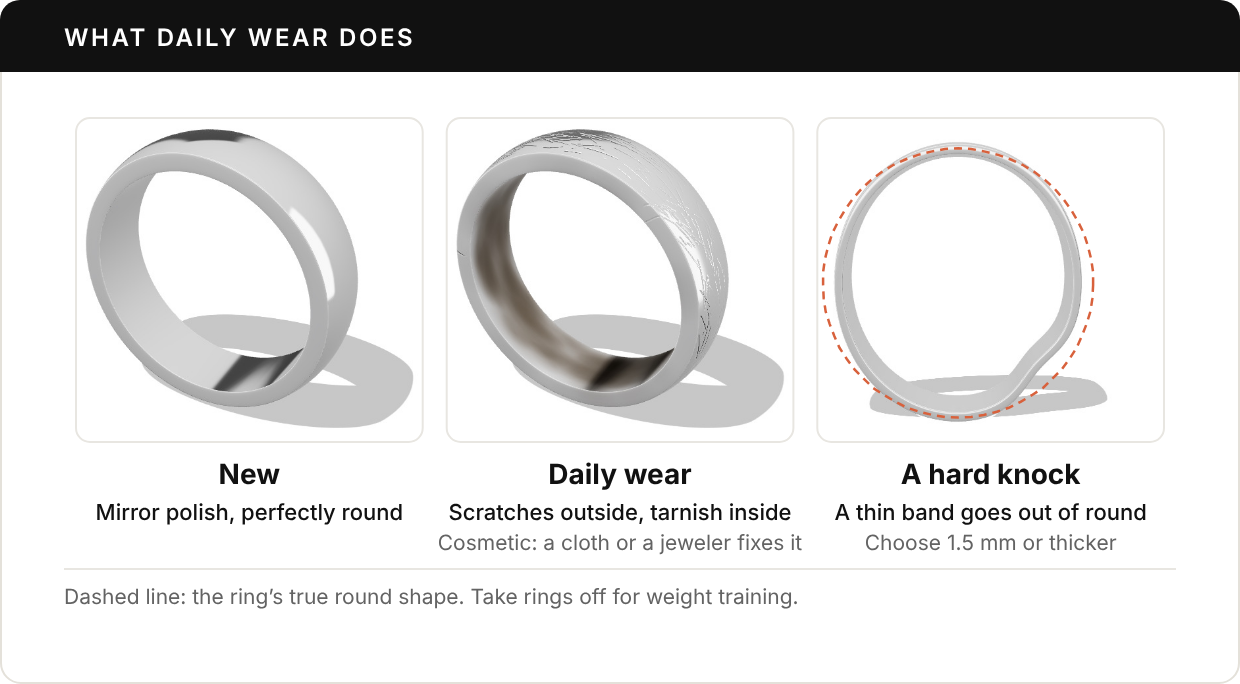
- Scratches. Rings hit more things than any other jewelry. Sterling is softer than steel, so a polished band shows marks quickly. This is cosmetic: a polishing cloth revives it, and a jeweler can refinish it in minutes.
- Tarnish. Daily-worn rings tarnish less than rings in a drawer, because wear keeps the surface bright, but the inside of the band and any recesses will darken. Clean with warm water and mild soap; see our cleaning guide.
- Deformation. A thin band can go out of round if it takes a hard knock. Choose 1.5 mm or more of thickness, and take rings off for weight training.
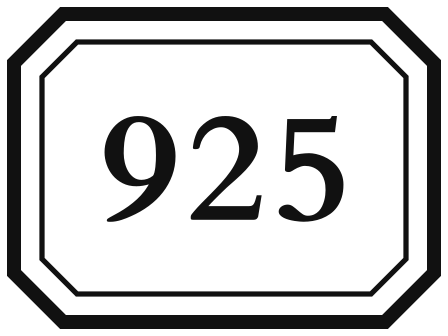
Sterling is usually nickel-free, so skin reactions are rare; a faint dark mark on the finger is tarnish transferring and washes off. If your skin reacts to a “925” ring, the metal is probably not sterling. Our guide to what 925 means explains the marks to look for.
7. Sizing basics
US ring sizes run in half-size steps; most American men wear a size 9 to 11 on the ring finger, but hands vary widely and the same man can need two different sizes on two different fingers. Measure the finger you will actually wear the ring on, at the end of the day, when it is warm, and buy a wide band a half size larger than a thin one. The full method, with a size chart in millimeters, is in our guide to finding your US ring size at home.
One advantage of silver over the hard alternative metals: a sterling band can be resized by a jeweler, usually up or down by one to two sizes, for a modest fee. Rings with a full pattern or stones all the way around are the exception.
8. Quality checks before you buy
- Stamp: 925 or STERLING inside the band, with a maker’s mark.
- Weight: a solid 6 mm sterling band in a size 10 weighs roughly 6 to 9 g; a 4 mm band about 3 to 5 g. Much lighter means a thin or hollow shank.
- Thickness: 1.5 mm or more for a daily band.
- Inside finish: smooth, with no seam or burr you can feel.
- Stones: set in a bezel or secure prongs, with no wobble.
- Policy: free resizing or exchange within a window is a sign the seller expects the ring to fit.
FAQ
Is sterling silver good for a men’s wedding band?
It can be, if you accept that it needs occasional polishing and will show its age. It is far cheaper than gold or platinum, it can be resized as your hands change, and it can be refinished indefinitely. If you want a ring that never changes, tungsten or titanium is harder; if you want one that can be repaired, resized, and passed on, silver is the better bet.
Can you shower with a sterling silver ring?
Plain water does no harm. Soap and shampoo leave a film that dulls the ring, and chlorinated or salt water accelerates tarnish. Take it off for pools, hot tubs, and the ocean, and dry it after a shower.
Why does my silver ring leave a black mark on my finger?
Tarnish, usually. Silver sulfide forms on the ring, rubs off onto the skin, and washes away. It is harmless. It happens more in humid weather, after exercise, and when lotions or hand sanitizer are involved. Green marks are different: they come from copper and point to a ring that is not sterling.
How wide should a men’s ring be?
5 mm to 7 mm suits most hands and most purposes. Go narrower for a pinky ring or a stacking band, wider for an index-finger ring or a statement band. When in doubt, 6 mm.
Does a comfort-fit band change my ring size?
Slightly. Because less metal touches the finger, a comfort-fit band feels looser than a flat band of the same marked size. Many jewelers suggest going down a quarter size in comfort fit. If you cannot try one on, measure carefully and prefer a seller with free resizing.
Bottom line
For a ring you will wear every day: a solid 925 sterling band or signet, 5 mm to 7 mm wide, 1.5 mm or thicker, comfort fit, in a brushed or lightly domed finish, bought a half size up if it is 6 mm or wider. Confirm the stamp, check the weight, and buy from a seller who will resize it.
Related guides
- How to Find Your US Ring Size at Home (With Size Chart)
- How to Wear a Signet Ring: A Modern Guide for Men
- Why Does Sterling Silver Tarnish?
Weight figures are typical ranges for solid sterling bands drawn from manufacturer specifications. Read our editorial policy.

