
Disclosure:The example pieces in this guide are from Ronatelli. The buying advice applies to any brand. Prices were checked on October 28, 2026.
A stack is two or three bracelets worn together on one wrist. Done well, it looks like a choice; done badly, it looks like everything you own at once. In silver the rules are simpler than in mixed materials, because the metal is already settled: what decides whether a stack works is how many pieces you wear, how different their widths and textures are, and where each one sits. This guide covers all three, how to stack with a watch, how to size pieces that are worn together, and five pairings that work.
Key takeaways
- Two pieces is the safe stack, three is the most for one wrist. Keep the other wrist for the watch, or bare.
- Make the pieces different: about 3 mm apart in width and different in texture, such as a woven foxtail beside a Cuban, or a chain beside a cuff.
- One piece leads. The anchor is the widest or most detailed; the others are slimmer and plainer.
- With a watch, stack on the other wrist. On the watch wrist, one slim bracelet at most.
- Size each piece on its own: the anchor at a comfortable fit, the slimmer piece snug, and a cuff by its inside circumference.
In this guide How many Width and texture Order With a watch Occasions Sizing Wear Pairings FAQ
How many: two is safe, three is the limit
Two bracelets is where most men should start, and where many stay: enough to read as a stack, few enough that each piece is still visible. Three is the most one wrist carries before the pieces start covering each other and the stack climbs up the forearm. Four or more works with light cord and bead bracelets, but in silver it turns into a cuff of metal that clinks every time you move.
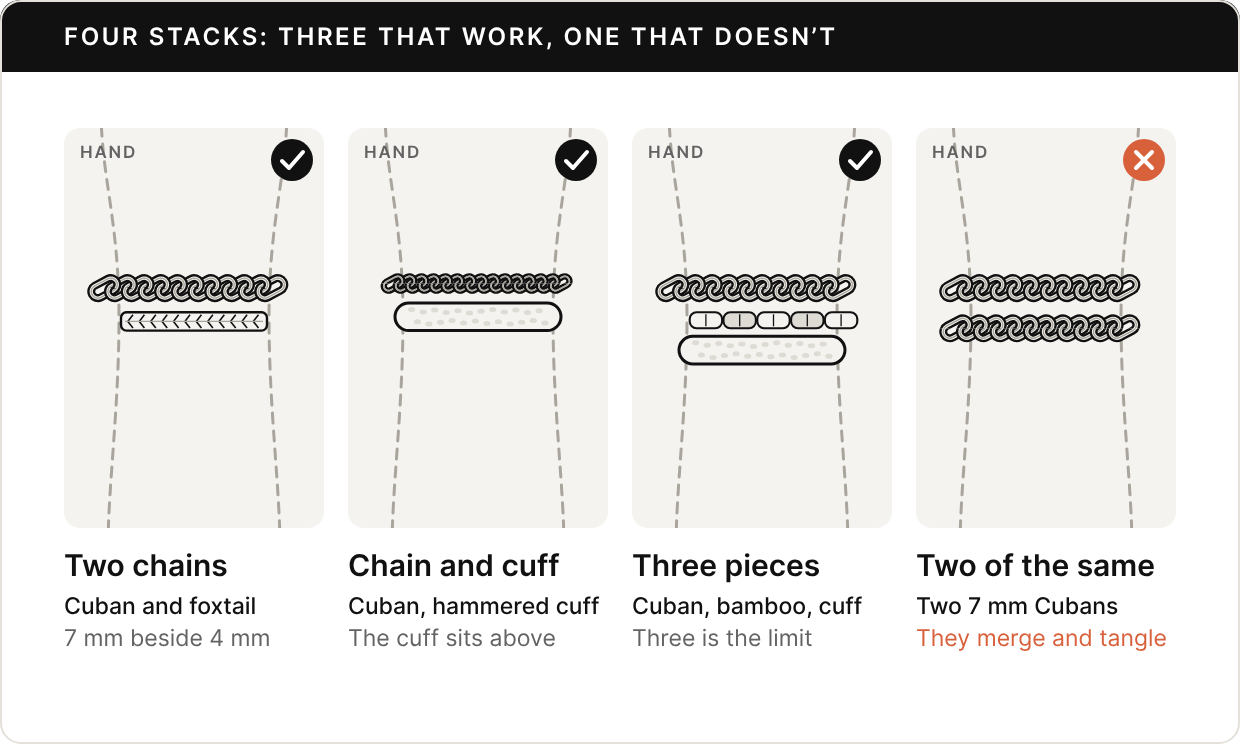
Stack one wrist and keep the other simple: the watch, a single bracelet, or nothing. Two stacked wrists cancel each other out, and the look tips from deliberate to busy.
Mix width and texture, not metals
A stack works when the eye can tell the pieces apart. Two bracelets of the same width and link style merge into one wide band and tangle as they move, so give each piece something its neighbor doesn’t have.
- Width: about 3 mm apart. A 4 mm foxtail beside a 7 mm Cuban reads as two pieces; a 6 mm beside a 7 mm reads as one. A cuff and a chain can sit closer in width, because their shapes already differ.
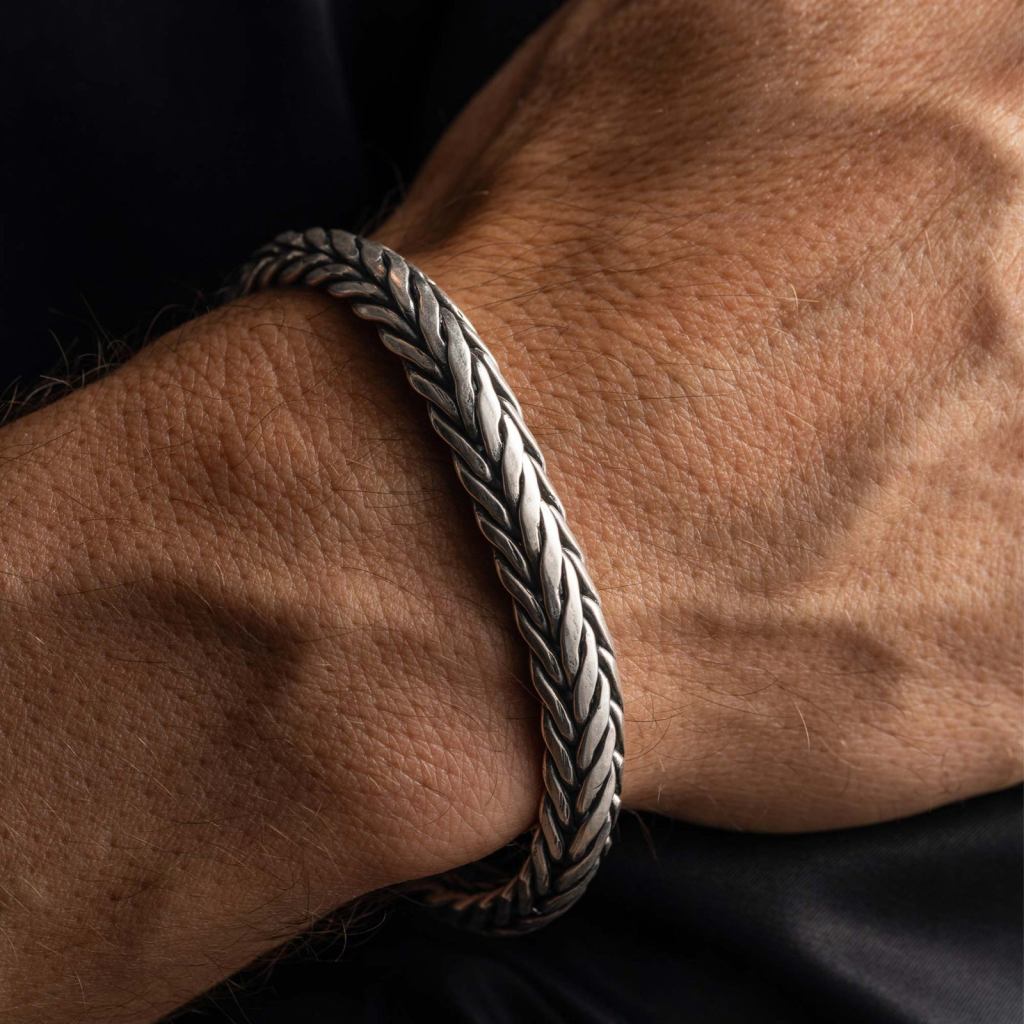
- Texture: one smooth, one worked. Polished Cuban links beside a woven foxtail, a plain chain beside a hammered cuff, a slim bamboo link beside a heavy braid.
- One anchor. The widest or most detailed piece leads, and the others are slimmer and plainer. Two statement pieces on one wrist compete; an engraved curb or a medallion bracelet wants the slim pieces around it, not another of its kind.
- One metal. Sterling beside sterling always matches, and oxidized and polished silver mix well, because the finish becomes part of the texture. If you add gold, make it one slim piece rather than half the stack.
Our guide to chain styles shows how each link pattern looks, and our guide to foxtail, braided, and Byzantine bracelets covers the woven ones; both help when you are choosing a second texture for a piece you already own.
Order: what goes nearest the hand
Most men wear the anchor nearest the hand, where it is seen first, and the slimmer piece just behind it. Bracelets slide down the forearm until they stop, so the order comes down to fit as much as to choice: the piece with a little more room slides further toward the hand, and a snug one stays behind at the wrist bone. If the anchor keeps ending up behind, size the slim piece down or the anchor up.
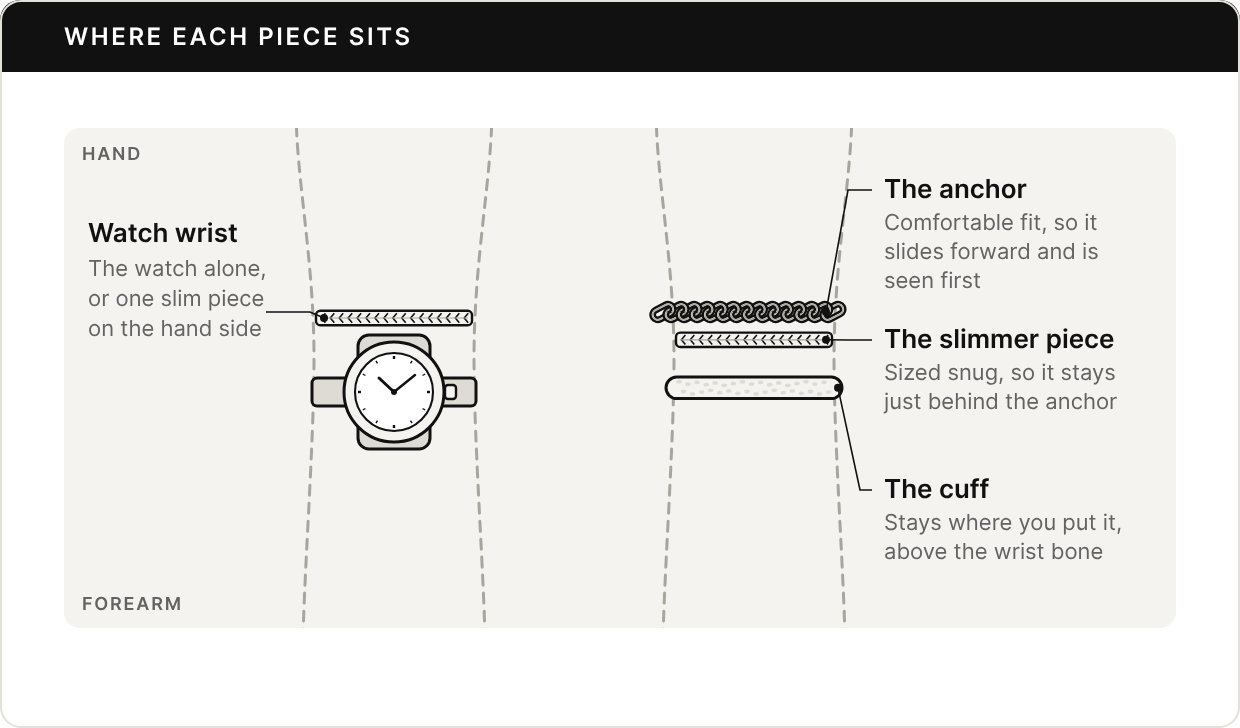
A cuff is the exception. It doesn’t slide, so it stays wherever you put it, and it is most comfortable just above the wrist bone, behind the chains. That makes a cuff the easiest third piece: it never rides into the other two. Our guide to cuffs versus chain bracelets covers how to put one on without bending it.
Stacking with a watch
Stack on the wrist without the watch. On the watch wrist, add one slim bracelet at most, 3.5 to 5 mm, fitted snug and worn on the hand side of the watch; anything more turns the watch into part of a pile and grinds against the case. A watch on one wrist and a two-piece stack on the other is the arrangement that works with almost everything. Our guide to wearing a bracelet with a watch covers which widths balance which watches.
Stacks for work, weekends, and evenings
- At the office. Keep the stack narrow enough to slide under a shirt cuff: two slim pieces, nothing much over 5 mm, or one slim chain beside a narrow cuff. Anything that catches on the cuff every time you reach for the keyboard is too much for a desk.
- On the weekend. T-shirts and rolled sleeves are where the full stack belongs: a 7 to 9 mm anchor, a slim second piece, and a cuff if you want three.
- In the evening and at weddings. Pare it back to one good piece or a pair, polished rather than oxidized, on the wrist without your watch. A suit makes a heavy stack look like it came from a different outfit.
Sizing pieces that are worn together
Size each piece on its own, from the same wrist measurement taken snug just below the wrist bone. The anchor gets a comfortable fit, your wrist plus ¾″ to 1″; the slimmer piece gets a snug fit, your wrist plus ½″ to ¾″. On a 7″ wrist, that means an 8″ anchor and a 7.5″ slim piece. Wide links, 8 mm and up, take room on the inside, so give them about ¼″ more. A cuff is sized by its inside circumference instead. Our bracelet size guide has the chart and three ways to measure.
With letter sizes, read the chart’s lengths rather than the letters. Ronatelli’s S, M, L, and XL are 7.1″, 7.9″, 8.7″, and 9.5″, so on many wrists both pieces land in the same size. That is fine: the pieces will trade places a little as you move, and it is the contrast in width and texture, not the exact order, that makes the stack.
How a stack wears
Pieces in a stack rub against each other all day. Sterling against sterling is an even match: both pick up fine scratches and settle into a soft satin sheen rather than gouging each other. Keep steel bracelets and stone beads out of a silver stack, though; both are harder than sterling and leave marks. Worn together, the pieces also darken at the same rate, so a stack stays matched. A piece you add later starts brighter and takes a few weeks to catch up, or a polishing cloth evens it out.
- Take the stack off for the gym. A bar or a grip presses the pieces into each other and into the wrist, and that is where dents come from.
- Store the pieces apart, flat and closed in a pouch or a small bag each, so the chains don’t knot around each other in a drawer.
- Clean them together. A cloth for the polished faces, warm soapy water and a soft brush for woven pieces; our guide to cleaning sterling silver at home covers the methods that are safe on bracelets.
Five silver pairings that work
Examples from Ronatelli’s bracelet collection, at their listed prices. Each pair follows the width and texture rules above, and every chain comes in S to XL; the cuff is one adjustable size.
| Stack | Pieces | Together |
|---|---|---|
| Everyday pair | PiecesSergo foxtail, 4 mm, with the Cana Cuban, 7 mm | Together$368 |
| Chain and cuff | PiecesSergo foxtail, 4 mm, with the Lugo hammered cuff, 6 mm | Together$418 |
| Slim accent | PiecesAlfo bamboo, 3.5 mm, with the Crein foxtail, 6 mm | Together$398 |
| Statement and accent | PiecesLesi heavy braided, 9 mm, with the Alfo bamboo, 3.5 mm | Together$618 |
| Three pieces | PiecesAlfo bamboo, 3.5 mm, Savona Cuban, 7 mm, and the Lugo cuff, 6 mm | Together$647 |
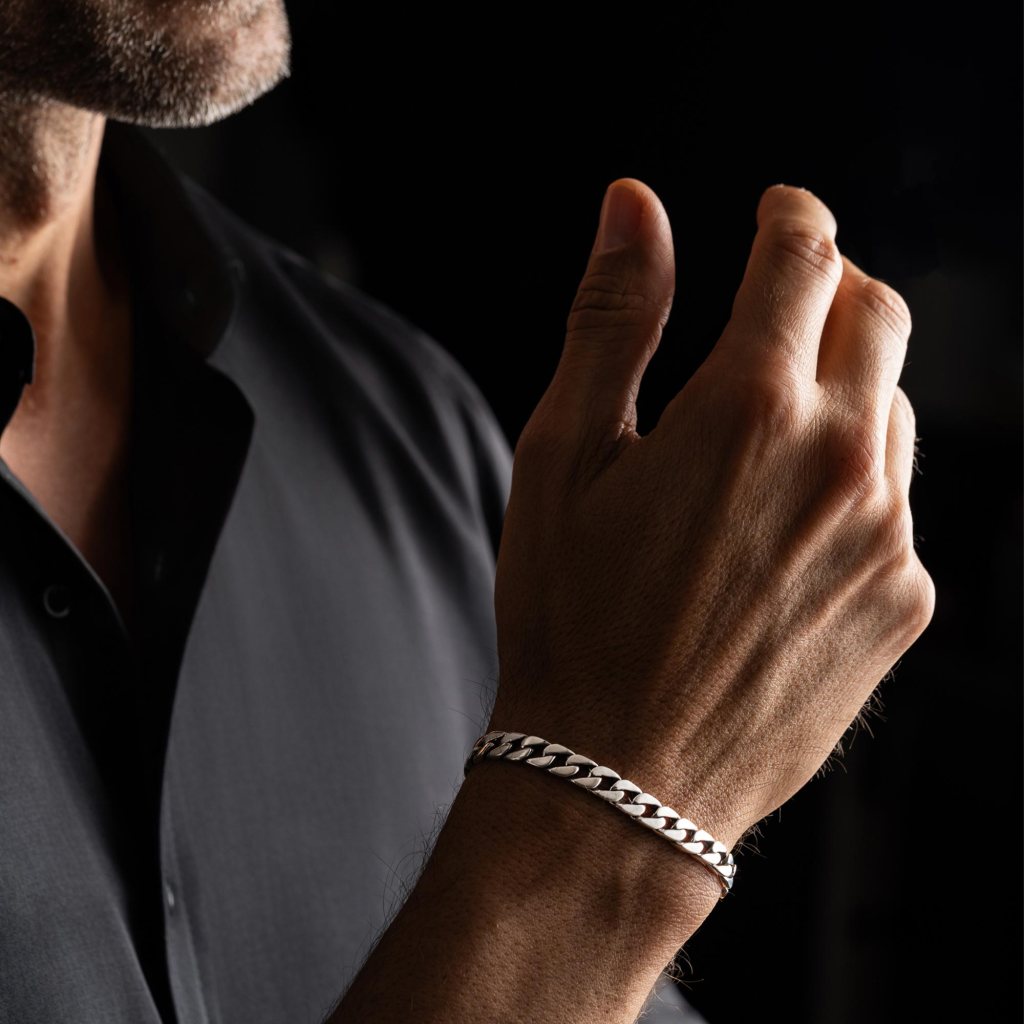
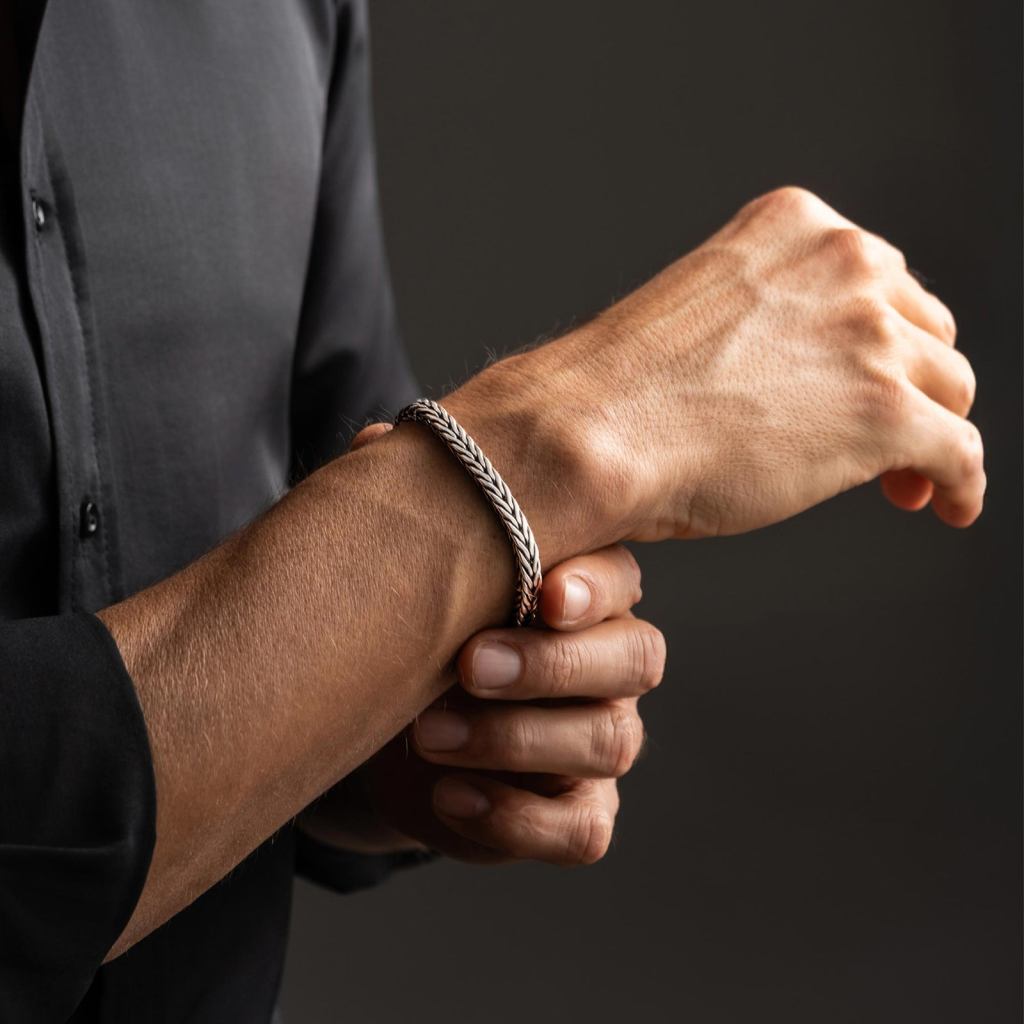
If you are starting from nothing, the everyday pair is the one to buy: the Sergo is slim enough to wear beside a watch on its own, and the Cana carries the stack. The Lugo cuff is the easiest addition to any chain you already own, and the Alfo is the accent that works next to almost anything.
FAQ
How many bracelets should a man wear at once?
One to three. Two is the safe stack, and three is the most one wrist carries before the pieces start covering each other.
Can you stack bracelets with a watch?
Yes, on the other wrist. On the watch wrist, wear one slim bracelet at most, 3.5 to 5 mm, fitted snug on the hand side of the watch.
Which wrist should you stack bracelets on?
The one without the watch, which for most men is the right. If you wear no watch, either works; the non-dominant wrist takes fewer knocks from desks and door handles.
Can you mix silver and gold bracelets in a stack?
Yes, if one metal leads. Keep the stack mostly silver and add gold as one slim piece, or keep the gold on the other wrist with a gold watch.
Should stacked bracelets be the same size?
Not necessarily. Size each piece from your wrist: the anchor at a comfortable fit, the slimmer piece snug, and wide links about ¼ inch longer.
Do silver bracelets scratch each other in a stack?
They wear each other evenly into a soft satin finish rather than gouging. Steel bracelets and stone beads are harder than sterling and do leave marks, so keep them out of a silver stack.
Bottom line
Start with two: an anchor 6 to 9 mm wide and a slimmer piece about 3 mm narrower in a different texture, both in sterling, on the wrist without your watch. Add a cuff as the third piece if you want more; it stays above the chains and never tangles with them. Size the anchor comfortable and the slim piece snug, and stop at three.
From the collection
Men’s sterling silver bracelets by Ronatelli
Thirty-one handmade 925 bracelets, from a 3.5 mm bamboo link to an 11 mm woven band, in sizes S to XL. Every cuff is adjustable.
Related guides
Width, fit, watch, and care guidance follows our bracelets, sizing, watch, and cleaning guides; the piece counts and the roughly 3 mm width gap reflect the common ground of published stacking advice from jewelers. Ronatelli prices and widths were checked on ronatelli.com on October 28, 2026, and may have changed since. Read our editorial policy.

