Most men’s jewelry sold today is made from one of three metals: sterling silver, stainless steel, or titanium. They look similar in a photo and behave very differently on the body. Silver is the precious metal with real value and a warm white color that needs occasional care; steel is the hard, cheap, maintenance-free option; titanium is the light, hypoallergenic one. Here is how they compare, and which to buy for each kind of piece.
Key takeaways
- Sterling silver is the only one of the three with intrinsic metal value, the only one a jeweler can resize and repair easily, and the one with the warmest, most refined color. It tarnishes and scratches, and both are reversible.
- Stainless steel is the hardest, cheapest, and lowest-maintenance. It looks cooler and grayer than silver, cannot be resized, and most grades contain nickel.
- Titanium is extremely light and the best choice for sensitive skin. It has a dark gray tone, scratches more easily than steel, and cannot be resized or soldered.
- For a chain or bracelet you care about, choose silver. For a cheap daily beater, steel. For a ring on reactive skin, titanium.
The comparison at a glance
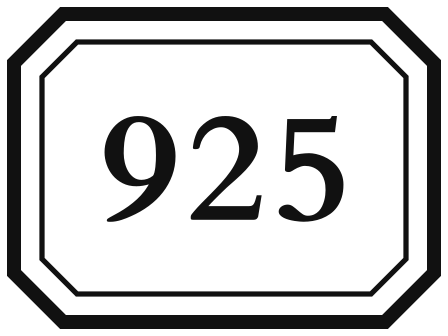
| Sterling silver (925) | Stainless steel (316L) | Titanium | |
|---|---|---|---|
| Color | Bright, warm white | Cool, slightly gray white | Dark gray, matte unless polished |
| Weight (density) | Heavy: about 10.4 g/cm³ | Medium: about 8 g/cm³ | Very light: about 4.5 g/cm³ |
| Scratch resistance | Low; scratches show, polish out | High | Medium; scratches easily but does not dent |
| Tarnish and corrosion | Tarnishes; reversible | Does not tarnish; resists rust | Does not tarnish or corrode |
| Skin sensitivity | Usually nickel-free; good for most skin | Contains nickel; usually tolerated, can react | Nickel-free, hypoallergenic |
| Resizing and repair | Easy; any jeweler | Rings cannot be resized; chains hard to repair | Cannot be resized or soldered |
| Intrinsic value | Yes; silver price × weight | Effectively none | Effectively none |
| Price of a piece | Medium to high; rises with weight | Low | Low to medium |
| Upkeep | Polishing cloth monthly | Soap and water | Soap and water |
Sterling silver
Sterling is 92.5% silver and 7.5% copper, which makes it a precious metal with a quoted price and a long history as the standard for men’s jewelry. It has the best color of the three: a bright, slightly warm white that photographs well and reads as jewelry rather than hardware. It is heavy in the hand, which is part of why it feels expensive. It is also soft compared with the other two, so a polished surface picks up fine scratches in weeks and settles into a soft sheen, and it tarnishes when exposed to sulfur, humidity, and sweat.
Both of those are cosmetic and both are reversible. A polishing cloth restores the surface in under a minute; a jeweler can re-polish a heavily worn piece to new. More to the point, silver is workable: a ring can be resized, a chain can be repaired, a clasp can be replaced, an engraving can be added. None of that is true of steel or titanium. Silver also has resale value tied to its weight; the others are worth what someone will pay for the design.
Choose silver if you want a piece you will keep, resize, repair, and eventually pass on; if you want the classic color; or if you want the weight. Think twice if you refuse to do any upkeep at all, or if the piece will live in a pool or a gym bag.
Stainless steel
Jewelry steel is usually 316L, the same marine-grade alloy used in watch cases. It is hard, so a polished steel chain stays polished for years; it does not tarnish; it shrugs off sweat and chlorine; and it is inexpensive because the metal itself has no value. It is the right material for a chain you will wear surfing or a bracelet you will not take off at the gym.
The trade-offs: the color is cooler and grayer than silver, closer to a watch case than to a jewelry metal, and polished steel can look flat next to silver. Steel rings cannot be resized, so a ring that stops fitting is a ring you replace. Steel chains are hard to repair because they cannot be soldered with ordinary jeweler’s tools. And 316L contains nickel; most people never notice, but a minority react, especially to rings and bracelets in constant skin contact. Finally, because steel is cheap to produce, the market is full of thin, hollow, low-effort pieces, so weight and construction matter here as much as with silver.
Choose steel if you want a zero-maintenance piece for hard use, or you are testing whether you like wearing a chain before buying silver. Think twice if you want warmth in the color, the option to resize, or any resale value.
Titanium
Titanium is less than half the weight of silver, does not corrode or tarnish, and is biocompatible, which is why it is used for implants and why it is the standard answer for men whose skin reacts to everything else. It has a natural dark gray color that most makers leave matte or brushed; it can be polished but does not reach the brightness of silver or steel. It is strong but not especially hard: a titanium ring scratches as easily as silver, and unlike silver the scratches cannot be polished out at home.
Titanium cannot be soldered in a normal workshop and cannot be resized, so sizing must be right the first time. Titanium chains are uncommon; the metal’s strengths show best in rings and bracelets. One real advantage over tungsten, the other popular hard-ring metal: titanium can be cut off in an emergency, where tungsten has to be cracked.
Choose titanium if you have sensitive skin, want the lightest possible ring, or like the dark matte look. Think twice if you want a bright white metal, a chain, or anything you might resize.
Which metal for which piece
| Piece | First choice | Why | Alternative |
|---|---|---|---|
| Everyday chain | Sterling silver | Color, weight, repairability; the chain is the piece most people keep longest | Steel for a hard-use beater |
| Chain for sports, swimming, work | Stainless steel | Chlorine, sweat, and knocks do nothing to it | Silver you take off for those activities |
| Bracelet | Sterling silver | Looks right next to a watch, ages well, repairable | Steel if it will share a wrist with a steel watch and get scratched anyway |
| Daily ring | Sterling silver | Can be resized as hands change; classic look | Titanium for sensitive skin |
| Ring for someone who reacts to metals | Titanium | Nickel-free and biocompatible | Nickel-free sterling from a maker who states the alloy |
| Signet ring | Sterling silver | Engraves deeply and the patina makes it legible | Steel engraves shallowly; titanium poorly |
| Pendant | Sterling silver | Detail, weight, and finish options | Steel for simple shapes |
What about tungsten, gold, and plating?
- Tungsten carbide is the scratch-proof ring metal: it stays polished for decades. It is also brittle (it can crack if dropped on tile), very heavy, cannot be resized, and has to be cracked off in an emergency. A ring metal only.
- Gold is the other precious metal, at many times the price of silver for the same weight. For men who want a white metal, white gold is rhodium-plated and needs re-plating; silver gives a similar look for a fraction of the cost.
- Silver-plated and “silver tone” pieces are base metal with a microscopic coating. They are the worst of every world: they wear through, they can react with skin, and they have no value. Buy steel instead if the budget is tight; it is honest about what it is.
- Rhodium-plated sterling and Argentium silver are the answers if you want silver’s look with less tarnish; see why sterling silver tarnishes.
FAQ
Is stainless steel better than sterling silver?
It is harder and needs no upkeep. Silver has the better color, holds value, and can be resized and repaired. Which is “better” depends on whether you want a tool or a piece of jewelry; for most men’s chains, bracelets, and rings that are meant to last, silver is the better buy.
Can you tell silver and stainless steel apart by looking?
Side by side, yes: silver is brighter and warmer, steel is grayer and cooler. On its own, weight is the tell; silver is noticeably heavier for the same size. Steel is also weakly magnetic in some grades, and never tarnishes. Our guide to telling real silver from fake has the tests.
Which metal is best for sensitive skin?
Titanium, then nickel-free sterling silver. Standard stainless steel contains nickel and is the most likely of the three to cause a reaction, although most people tolerate it.
Does titanium or stainless steel tarnish?
No. Neither reacts with sulfur the way silver does. Steel can show water spots and, in cheap grades, light surface rust; titanium does nothing at all.
Bottom line
Silver for the pieces you care about, steel for the pieces you abuse, titanium for skin that reacts. If you are buying one chain, one bracelet, or one ring to wear for years, sterling silver is the one you will not regret, provided you are willing to pick up a polishing cloth once a month.
Related guides
- What Does 925 Mean on Jewelry?
- Sterling Silver Chains for Men: The Complete Buying Guide
- Men’s Silver Rings: Styles, Band Widths, and What to Look For
Density figures are standard reference values. Read our editorial policy.

