An ID bracelet is a chain with a flat plate in the middle, made to be engraved. It started as a soldier’s backup to his dog tags, and it is back in sterling silver: one online retailer says heavier ID-style bracelets beat their forecasts this fall. A good one comes down to four things: a plate thick enough to hold an engraving, a chain that matches it, lettering you can actually read, and a snug fit that keeps the plate on top of your wrist. Here is how to get each one right, and what to put on the plate.
Key takeaways
- Plate: about 1½″ to 2″ long and roughly as tall as the chain is wide. Ask for the thickness; heavy plates run about 2 mm.
- Chain: solid curb or Cuban, 6 to 9 mm for every day, with a large lobster clasp or, from 8 mm, a box clasp.
- Engraving: one short line on the front reads best; put a date or message on the back, and ask for a proof.
- Fit: snug, your wrist plus about ½″, so the plate stays on top.
- For a medical ID, engrave your name first, then your city, an emergency contact, and critical medical details.
In this guide What it is The plate Chain and clasp Engraving What to engrave Fit FAQ
What an ID bracelet is
An ID bracelet is a chain bracelet with a flat plate, the ID plate, set in the middle to carry an engraving. It began as identification. A silver chain bracelet engraved with a soldier’s name and rank, from around 1917, is held by Dickinson College’s archives, and in World War II service members wore engraved ID bracelets as a backup to their dog tags, as Buck Mason notes in its listing for a wartime piece.
Today the plate carries a name, initials, a date, or medical details. The fall 2026 sales report from LHC Jewelry, an online silver retailer, lists heavier ID-style bracelets among the men’s pieces that beat their forecasts, alongside 4 to 6 mm chains and signet rings.
The plate: size and thickness
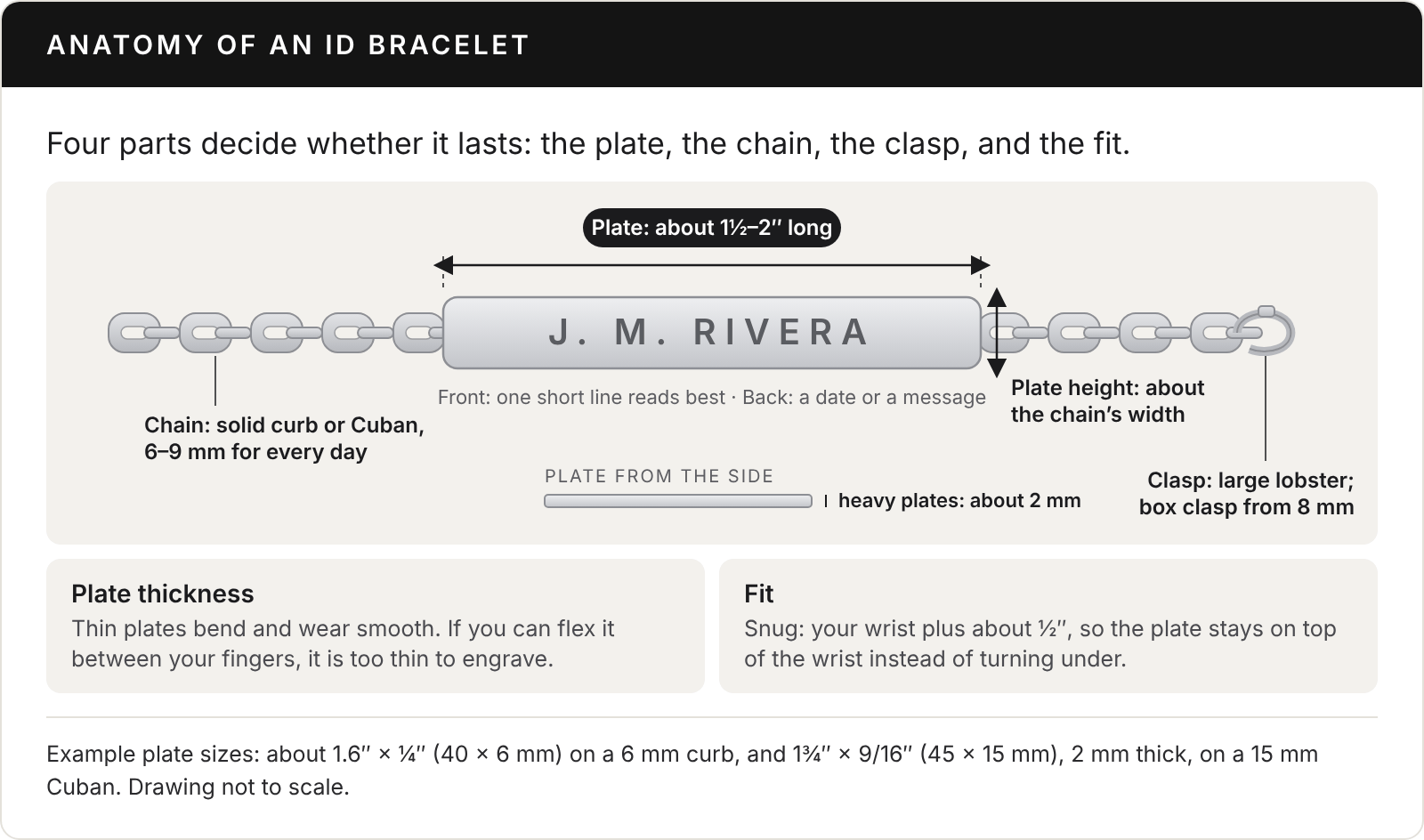
The plate is what you are buying an ID bracelet for, so start there. In the listings we checked, plates run about 1½″ to 2″ long and roughly as tall as the chain is wide: a 6 mm curb carries a plate about ¼″ (6 mm) tall, and a 15 mm Cuban one about 9/16″ (15 mm) tall.
| Listing | Chain | Plate | Engraving |
|---|---|---|---|
| Hersey (UK) | Chain6 mm curb; 7.5″ or 8.5″ | PlateAbout 1.6″ × ¼″ (40 × 6 mm) | EngravingOne line, up to 15 characters |
| Heartsmith | Chain9 mm curb | PlateOver 1¾″ × over ⅓″ | EngravingFront and back |
| Sandy Steven Engravers | Chain15 mm Cuban; 8″ or 9″; 77.3 g at 8″ | Plate1¾″ × 9/16″ (45 × 15 mm), 2 mm thick | EngravingPriced per line, with a proof before cutting |
Thickness is the number most listings leave out, and it matters most. A thin plate bends when the bracelet catches on a desk edge, and a shallow engraving on it wears smooth; our bracelet buying guide flags plate thickness as the thing to watch. Heavy plates run about 2 mm, like Sandy Steven’s. If a listing doesn’t say, ask, and when the bracelet arrives, press the plate gently between your fingers: if it gives, it is too thin to carry an engraving for years.
Chain and clasp
Most ID bracelets use a curb or Cuban chain, because its flat, twisted links lie flush with the plate. Figaro and rope versions exist, but a plate looks best on a chain of about its own height. For every day, 6 to 9 mm suits most wrists, the same range our bracelet buying guide gives for a plain chain bracelet; go wider only if the plate is meant to be the statement.
Buy the chain solid, not hollow: a wrist takes far more knocks than a neck, and the plate adds weight that hollow links have to carry. That weight adds up: Sandy Steven’s 15 mm Cuban ID bracelet weighs 77.3 g at 8″. For the clasp, choose a large lobster, 12 to 16 mm, up to about 8 mm wide, and a box clasp with safety catches above that, as our guide to bracelet clasps explains.
Engraving that stays readable
- Hand engraving. An engraver cuts the letters with a hand tool. It is the most individual finish and usually the most expensive, and it cuts into the metal.
- Machine engraving. A machine traces the lettering with a cutter or a diamond-tipped point, the method Xometry lists for ID bracelets. The lines are crisp and even.
- Laser engraving or marking. A laser can cut into the metal or, at low power, only discolor the surface; marking leaves the surface intact, Xometry notes. On silver you will polish, ask for engraving that removes metal, because a mark with no depth has nothing to protect it.
Small plates hold very little. Hersey limits its 40 × 6 mm plate to one line of 15 characters, and one reviewer of Heartsmith’s bracelet found the engraving so small it was hard to read. Fewer characters mean bigger letters, so keep the front to a name or initials, put a date or message on the back, and ask for a proof before anything is cut; Sandy Steven Engravers, for one, sends a proof within 24 hours and charges $10 a line.
What to engrave
- A name or initials on the front: the classic choice, and the one that reads best on a small plate.
- A date on the back: a wedding, a birth, a graduation, or the day he started a job.
- Coordinates or a short line that means something to him, kept to what fits in one or two lines.
- Service details on a military-style piece: name, branch, and years. Leave out any Social Security or service number.
- Medical information. For a medical ID, Road iD suggests this order: your name, your city and state, an emergency contact, then critical details such as allergies or conditions.
For more ideas for a ring or a pendant, and what engraving does to a gift’s return, see our guide to what to engrave on a gift for him.
How an ID bracelet should fit
Wear it snug: your wrist measurement plus about ½″, the fit our bracelet buying guide recommends for ID bracelets. Any looser and the plate slides around to the underside of your wrist, where nobody sees it and it takes the knocks. If you wear a watch, put the ID bracelet on the other wrist, where the plate won’t grind against the case; our guide to wearing a bracelet with a watch has the details. Buying it as a gift? Our guide to buying a men’s bracelet without asking his size shows how.
FAQ
What is a men’s ID bracelet?
A chain bracelet with a flat plate in the middle made for engraving, usually with a name, initials, a date, or medical details. It began as a soldier’s backup to his dog tags.
What should I engrave on an ID bracelet?
A name or initials on the front, and a date or short message on the back. For a medical ID, put the name first, then your city and state, an emergency contact, and critical medical details.
How many characters fit on an ID bracelet?
It depends on the plate. A small 40 × 6 mm plate may take only one line of about 15 characters; a larger plate takes two or three short lines. Ask the seller for its limit and a proof.
Should an ID bracelet be tight or loose?
Snug: your wrist plus about ½ inch, so the plate stays on top of the wrist instead of turning under.
Can you engrave both sides of an ID bracelet?
Usually, yes. Many plates can be engraved front and back, though some sellers price each side or each line separately.
Is sterling silver good for an ID bracelet?
Yes, with a solid chain and a thick plate. Sterling engraves cleanly and can be polished for decades; thin plates and hollow links are what bend and dent.
Bottom line
Buy an ID bracelet for its plate: about 1½″ to 2″ long, as tall as the chain is wide, and thick enough that it won’t flex. Put it on a solid 6 to 9 mm curb or Cuban with a clasp you can work one-handed, keep the front to a name or initials, ask for a proof, and wear it snug so the plate stays where it can be seen.
From the collection
Men’s sterling silver bracelets by Ronatelli
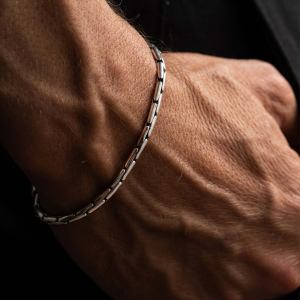
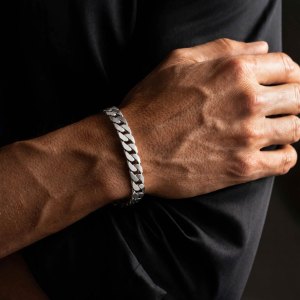
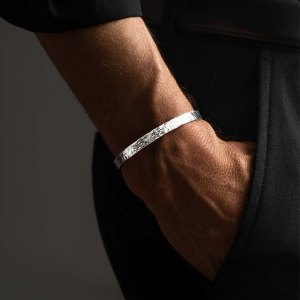
Thirty-one handmade 925 bracelets, from a 3.5 mm bamboo link to an 11 mm woven band, in sizes S to XL. Every cuff is adjustable.
Related guides
Plate sizes, weights, prices, and engraving options are from the product pages of Hersey, Heartsmith, and Sandy Steven Engravers, checked on October 30, 2026, and may have changed. The history follows Dickinson College’s Archives & Special Collections and Buck Mason; engraving methods follow Xometry; the medical ID order follows Road iD; and the sales trend follows LHC Jewelry’s fall 2026 report. Width, clasp, and fit advice follows our bracelet buying guide. Read our editorial policy.

