
Disclosure:The example pieces in this guide are from Ronatelli. The care advice applies to any brand. Prices were checked on October 28, 2026.
Yes. Sterling silver is made to be worn, and a bracelet worn every day stays brighter than one kept in a drawer, because skin and sleeves rub off the first film of tarnish before it can build. What sterling can’t take is chlorine, bleach, and hard knocks. This guide goes through the shower, the pool and the sea, the gym, and bed one at a time, then shows what a year of daily wear does to a bracelet and what to check.
Key takeaways
- Wear it every day. Daily wear keeps tarnish down; the bracelets that go black are the ones left in a drawer.
- The shower is fine for plain sterling. Water does no harm. Rinse the soap out of the links and dry it, or take it off, which is less work.
- Take it off for pools, hot tubs, and bleach. Chlorine is the one everyday exposure that damages sterling rather than just tarnishing it.
- Take it off for weights, not for a run. Bars and handles dent links and press the clasp into the wrist; sweat only needs a rinse.
- Check the clasp once a year. The spring is the part that wears out, and a clasp that doesn’t snap shut is how bracelets get lost.
In this guide Short answer Shower Pool and sea Gym Sleep A year of wear Cleaning Examples FAQ
The short answer: keep it on, with a few exceptions
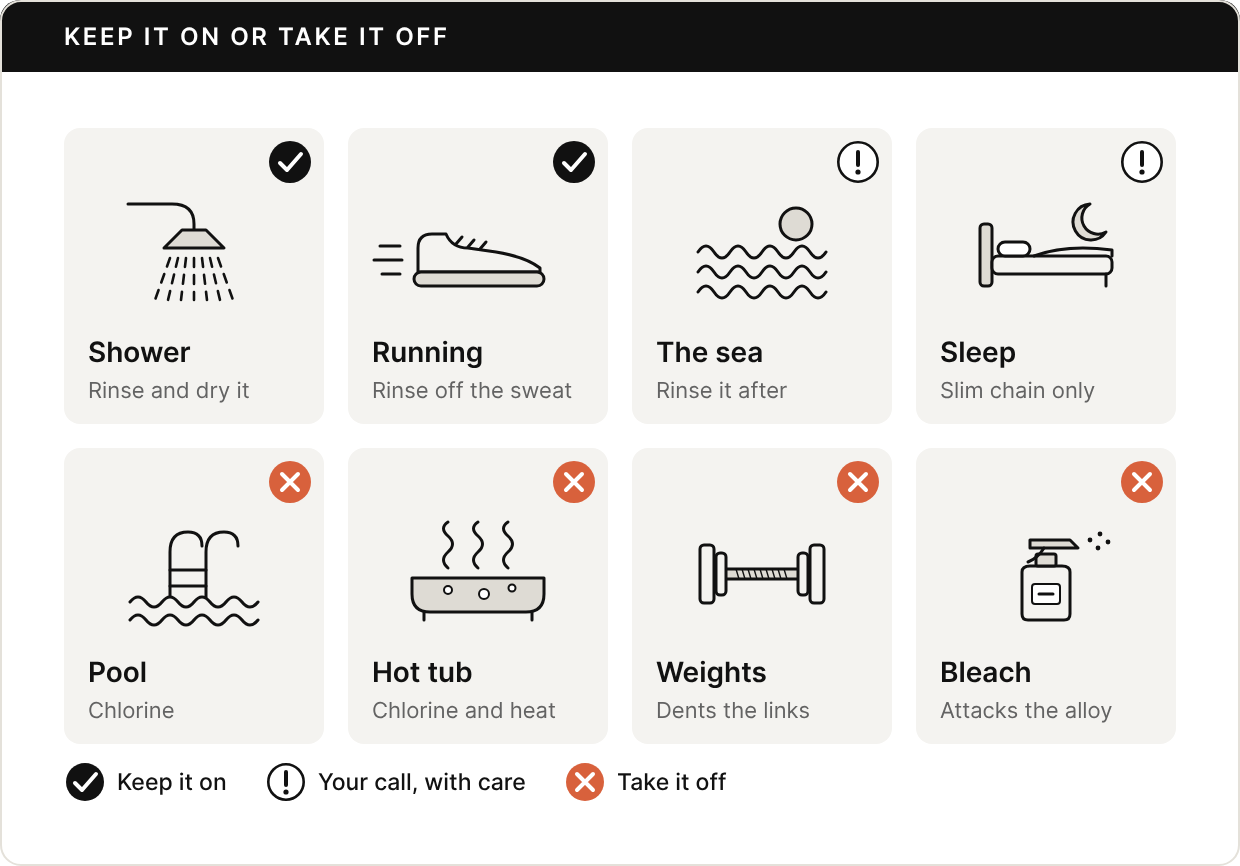
A plain sterling bracelet can stay on through most of a day: work, a commute in the rain, washing your hands, a run. The exceptions are the things that attack the metal (chlorine, bleach, sulfur springs) and the things that put force on it (weights, yard work, moving furniture). Bed and the sea sit in between.
| Activity | Keep it on? | What to do |
|---|---|---|
| Shower | Keep it on?Yes, or take it off | What to doRinse out the soap and dry it |
| Rain, washing your hands | Keep it on?Yes | What to doDry it if it gets soaked |
| Running and cardio | Keep it on?Yes | What to doRinse off the sweat and dry it |
| Weights | Keep it on?No | What to doBars dent links and press the clasp |
| Pool | Keep it on?No | What to doChlorine dulls sterling and can pit it |
| Hot tub | Keep it on?No | What to doMore chlorine than a pool, plus heat |
| The sea | Keep it on?Not to swim | What to doRinse in fresh water the same day |
| Sulfur hot spring | Keep it on?No | What to doDarkens silver fast |
| Sleep | Keep it on?Your call | What to doA slim chain only; a cuff can bend |
| Cleaning with bleach | Keep it on?No | What to doBleach attacks the alloy |
| Yard work, moving | Keep it on?No | What to doSnags and knocks |
| Cologne and lotion | Keep it on?Put it on after | What to doLet them dry first |
In the shower: harmless, but dry it
Water does nothing to sterling silver on its own. What builds up when a bracelet goes through every shower is everything else: soap and shampoo leave a film in the gaps between the links that dulls the shine, hard water leaves chalky spots, and the clasp stays wet inside. Moisture left in the links also speeds up the next round of tarnish.
Jewelers split on whether to bother. Blue Nile advises taking silver off before you shower; Ronatelli says its pieces can get wet as long as you dry them with a soft cloth soon after. For plain sterling, both are right: the shower won’t harm the metal, but taking the bracelet off is less work than keeping the links clean. If you leave it on:
- Rinse it last. Run it under clean water after the soap and shampoo, so the film doesn’t dry in the links.
- Pat it dry. Press it in a towel, working into the links and around the clasp, rather than leaving it to air-dry.
- Wash it every month or two. A soak in warm water with a drop of dish soap and a soft toothbrush lifts the film a cloth can’t reach; our guide to cleaning sterling silver has the steps.
Oxidized and engraved pieces can go in the shower too. It is silver dips and the foil bath, not water, that strip their dark finish.
Pools, hot tubs, and the sea
Chlorine is the one everyday exposure that damages sterling rather than just tarnishing it. It turns the surface of the silver into silver chloride, a pale film that darkens to gray in sunlight, and repeated swims can leave a bracelet dull and, over time, pitted. The CDC recommends a free chlorine level of at least 1 part per million in pools and at least 3 in hot tubs, and a hot tub adds heat, which speeds the reaction. Take the bracelet off before you get in.
The sea is gentler but not harmless. Salt speeds up tarnish, and wet sand scratches a polished surface. One swim won’t ruin a bracelet, but rinse it in fresh water and dry it the same day, and leave it off if you plan to spend the day in the water.
Sulfur hot springs darken silver faster than anything else here. The rotten-egg smell is hydrogen sulfide, the same gas that tarnishes silver in ordinary air, at a far higher concentration. Leave silver in the locker.
If a bracelet has been in the pool, rinse it in clean water, dry it, and go over it with a polishing cloth. If it still looks gray or cloudy, wash it in warm, soapy water; plain sterling that has gone dark can go in the baking soda and foil bath in our cleaning guide. If you want a bracelet you can swim in without thinking about it, that is a job for titanium or stainless steel; our metals comparison covers the trade-offs.
At the gym: a run, yes; weights, no
Sweat carries salt and sulfur compounds, so a bracelet worn through workouts tarnishes faster, and faster on some people than on others. That is cosmetic: rinse the bracelet in plain water after the session, dry it, and it is fine. Ronatelli’s FAQ gives the same advice for its chains: exercise in them if you like, and dry them with a towel as soon as you can.
Weights are different, because the risk is force rather than chemistry.
- Bars and handles. Knurled bars and dumbbell handles grind against the links, and a heavy grip can dent hollow links.
- The clasp. Gripping a bar presses the clasp and the links into the underside of the wrist. That is uncomfortable, and it strains the clasp.
- Machines and cables. A loose bracelet can catch on a pin or a cable and break at its weakest point, usually the clasp or the ring that joins it to the chain.
- Cuffs. A bar can press a cuff out of shape, which is why our guide to cuffs and chain bracelets says to take it off.
Put the bracelet in a zipped pocket of your bag, not loose with your keys and padlock, which scratch it.
In bed: take it off, or wear the right one
Most jewelers advise taking bracelets off at night, and it is the safe default. Overnight, a bracelet is pressed between your wrist and the mattress, it can catch on bedding or hair, and it sits against warm skin for eight hours. A slim chain with a secure clasp usually comes through fine; the risk grows with everything that sticks out.
- Fine to sleep in, if you want to: a slim chain bracelet, up to about 5 mm, fitted so it doesn’t catch, with a clasp that can’t open on its own, such as a lobster or a box clasp with its latch closed.
- Take off: cuffs, which can be pressed out of shape; wide woven and braided bracelets, which catch on fabric; statement pieces with raised detail; and anything with a clasp that closes weakly.
- Give it a home. Use a dish on the nightstand, so it is in the same place every morning. A bracelet left in the sheets is how they get lost.
What a year of daily wear does
A sterling bracelet worn every day for a year doesn’t look new, and it isn’t meant to. Here is what changes, and what to check.
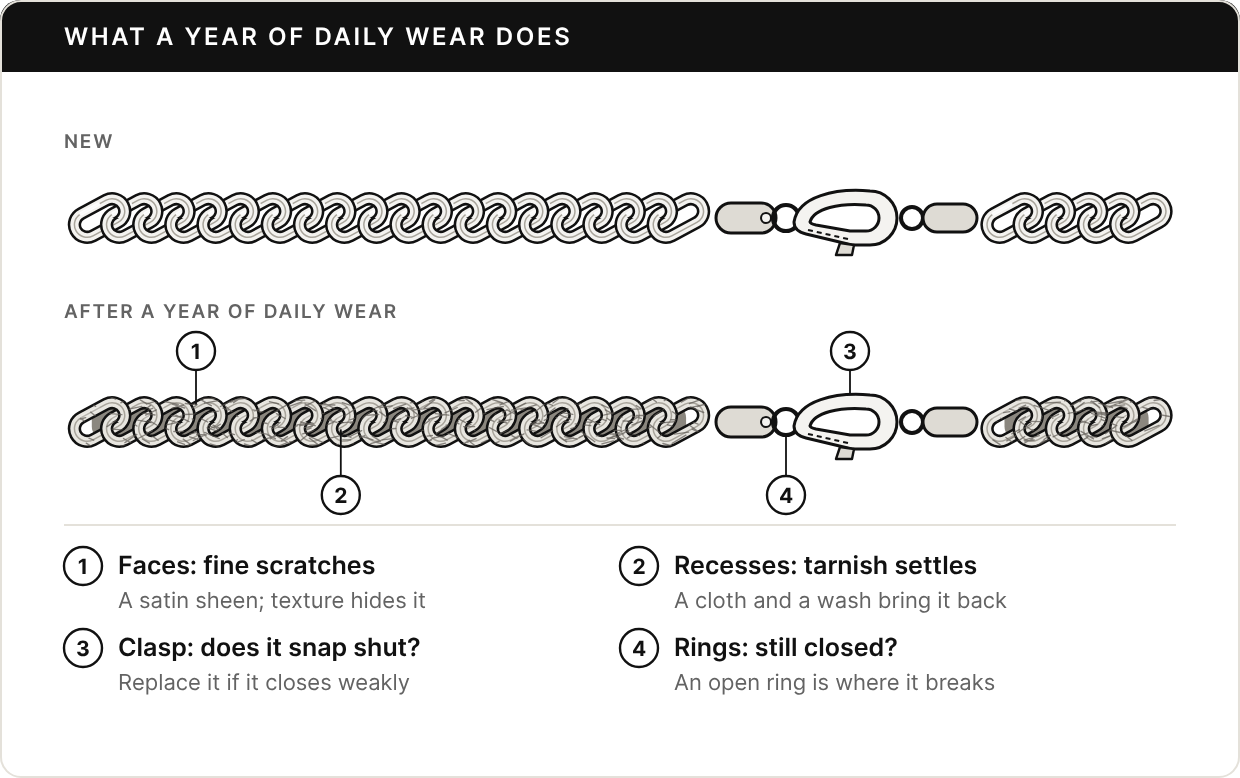
- The surface softens. Fine scratches from desks, sleeves, and the watch on the other wrist spread across the links, and a high polish settles into a satin sheen. That is the normal look of worn silver, and hammered and textured pieces show it least. A jeweler can re-polish a bracelet if you want the shine back, but each polish takes off a little metal.
- Tarnish collects in the recesses. The faces that rub against skin stay bright, and the gaps between links, where nothing rubs, go gray. On a woven or engraved bracelet that reads as depth; on a plain chain, a cloth and an occasional wash bring it back.
- The clasp spring wears. It is the one moving part, and the first to fail. Check that a lobster clasp snaps shut on its own and its trigger springs back, and that a box clasp clicks and its latch holds. A clasp that closes weakly or opens by itself needs replacing, which is a quick job for a jeweler.
- The small rings can open. Look at the ring that joins the clasp to the chain and at the end links on both sides. A ring that has pulled open, even slightly, is where a bracelet comes apart.
- Oxidized detail fades on the high points. On engraved pieces, the dark finish wears away where the bracelet rubs. That is expected, and a jeweler can darken it again.
Check the warranty before you need it. Ronatelli’s lifetime warranty, for example, covers a clasp that fails under normal conditions, but not general wear, dents, and scratches from daily activities, or damage from chlorine, bleach, or perfume.
When to clean a bracelet you wear every day
- Monthly: a polishing cloth, pulled along the links and around the clasp. It takes thirty seconds.
- Every two or three months, or when it looks dull: warm water, a drop of dish soap, and a soft toothbrush, then a thorough dry. This is what lifts shower film and sweat out of the links.
- The same day: a rinse in clean water and a dry after the sea, the pool, or a hard workout.
- Rarely, if ever: the baking soda and foil bath, for plain sterling that has gone dark. Not for oxidized, engraved, or stone-set pieces.
Our guide to cleaning sterling silver has each method step by step, our guide to why sterling silver tarnishes covers storage, and woven bracelets have their own routine in our guide to foxtail, braided, and Byzantine bracelets.
Bracelets for every day at Ronatelli
A bracelet that is easy to wear daily has links that flex without kinking, a width that slides under a shirt cuff and sits beside a watch, and a clasp you trust. Examples from Ronatelli’s bracelet collection, at their listed prices. The chain bracelets come in S (7.1″), M (7.9″), L (8.7″), and XL (9.5″); the cuff is one adjustable size.
| Bracelet | Why it suits every day | Width | Price |
|---|---|---|---|
| Crein | Why it suits every dayFoxtail that bends like a cord; box clasp | Width6 mm | Price$249 (was $299) |
| Cana | Why it suits every dayCuban links; box clasp with a side latch | Width7 mm | Price$199 (was $249) |
| Bari | Why it suits every daySlim Cuban for the watch wrist; lobster clasp | Width5 mm | Price$169 |
| Sergo | Why it suits every dayThe slimmest foxtail; lobster clasp | Width4 mm | Price$169 |
| Lugo | Why it suits every dayHammered cuff that hides scratches; no clasp | Width6 mm | Price$249 |
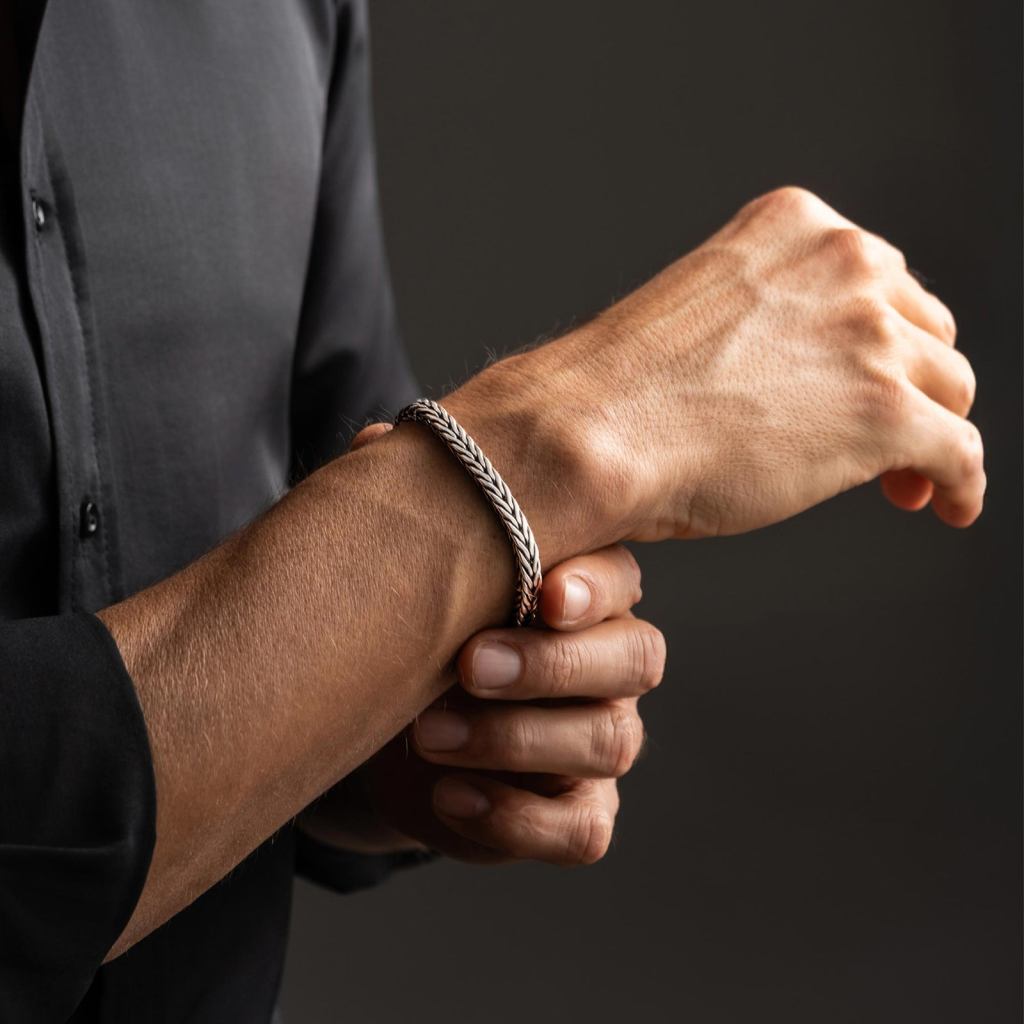
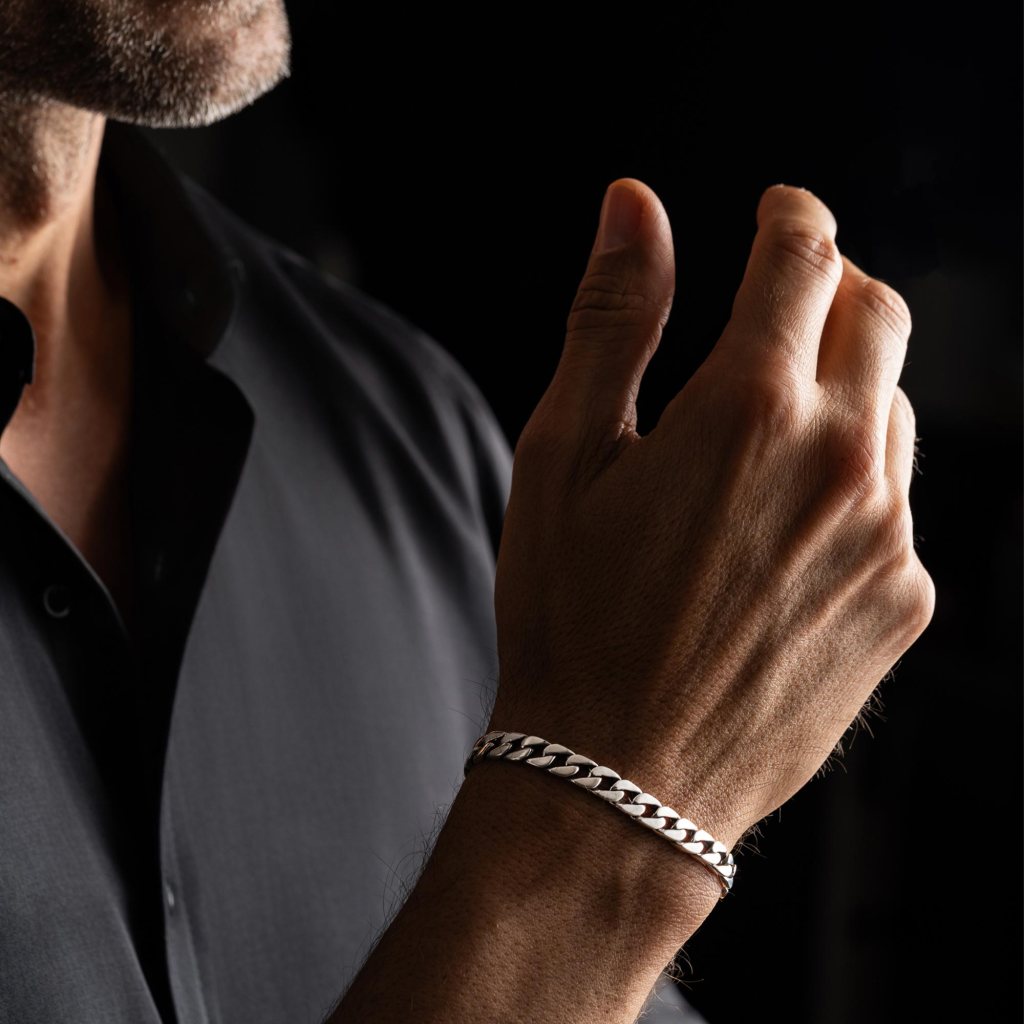
The Crein is the one to start with: a 6 mm foxtail with a box clasp and the longest review record in the collection, 4.8 stars from 405 reviews. The Cana is the heavier everyday piece. The Bari and the Sergo are slim enough for the watch wrist, and for sleeping in if you do. The Lugo can stay on through most of a day, but take it off for the gym and for bed.

FAQ
Can you shower with a sterling silver bracelet?
Yes. Water doesn’t harm sterling. Rinse the soap out and dry the bracelet afterward, or take it off, which saves cleaning the film out of the links later.
Can you swim with a silver bracelet on?
Not in a pool or a hot tub: chlorine dulls sterling and can pit it. A swim in the sea does less harm, but rinse the bracelet in fresh water and dry it the same day.
Is it OK to sleep with a bracelet on?
A slim chain with a secure clasp usually comes through fine, but most jewelers advise taking bracelets off at night. Take off cuffs, wide woven bracelets, and statement pieces, which can bend or catch.
Will sweat ruin a silver bracelet?
No. Sweat speeds up tarnish, which is a surface film that cleans off. Rinse the bracelet in plain water after a workout and dry it.
Why is my silver bracelet turning dark?
That is tarnish: silver reacting with sulfur from sweat, lotion, the air, and things like rubber and wool. Daily wear keeps it down, and a polishing cloth removes it. Our guide to why sterling silver tarnishes covers the causes.
Does wearing silver every day keep it brighter?
Yes. Daily contact with skin and clothing rubs off tarnish before it builds, so a bracelet you wear needs less cleaning than one in a drawer. What shortens its life is chlorine, hard knocks, and a worn clasp left unchecked.
Bottom line
Wear it. A plain sterling bracelet can stay on through work, the shower, the rain, and a run, as long as you dry it when it gets wet. Take it off for pools, hot tubs, bleach, sulfur springs, and weights, and for bed if it is a cuff or a wide piece. Wipe it monthly, wash it every couple of months, and check once a year that the clasp still snaps shut.
From the collection
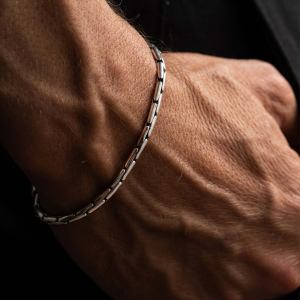
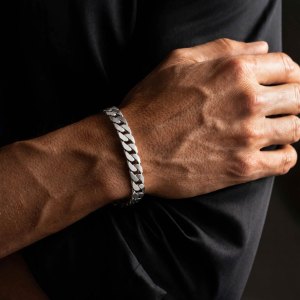
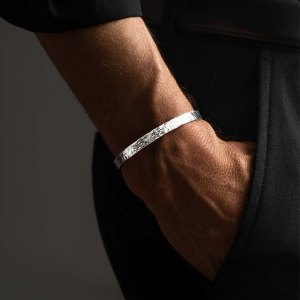
Men’s sterling silver bracelets by Ronatelli
Thirty-one handmade 925 bracelets, from a 3.5 mm bamboo link to an 11 mm woven band, in sizes S to XL. Every cuff is adjustable.
Related guides
Chlorine levels are the CDC’s recommendations for pools and hot tubs; the darkening of silver chloride in light follows the Royal Society of Chemistry, and the tarnish chemistry follows the Canadian Conservation Institute and our tarnish guide. The shower, sea, sleep, and clasp advice reflects published guidance from jewelers, including Blue Nile, Robinsons Jewelers, and Martin Busch Jewelers. Ronatelli’s care advice and warranty terms come from its FAQ and lifetime warranty pages, and its prices, widths, and ratings from its product pages, checked on October 28, 2026. Read our editorial policy.

