Because your finger really is smaller. In the cold, your body narrows the blood vessels that feed your hands to keep your core warm, and with less blood in them, your fingers shrink; warmth does the opposite. A ring that fits in October can spin in January and feel tight in July. Usually the answer isn’t resizing. It is knowing when a loose ring is a risk, using a quick fix for the cold months, and sizing at the right time of day. Here is how.
Key takeaways
- Cold shrinks your fingers, not your ring. Heat, exercise, and salty food make them swell.
- If it meets the knuckle with some resistance on a warm evening, it fits. Resize it for winter and it will be tight all summer.
- The risk is losing it. Take a loose ring off before heavy gloves, snow, or cold water.
- Quick fixes: wear it on your dominant hand, add a silicone sizer, or have a jeweler fit sizing beads or a ring guard.
- Size a ring in the afternoon or evening with warm hands, never right after coming in from the cold.
In this guide Why it happens Loose or too big? The risk Quick fixes When to resize Sizing for all year FAQ
Why your fingers shrink in the cold
When you are cold, the muscles around the arteries that feed your hands tighten, restricting blood flow to protect your organs and keep your core warm, Cleveland Clinic explains. With less blood in them, your fingers get slightly smaller, and the ring that sat snugly starts to turn. Warmth does the reverse: “Cold temperatures cause fingers to shrink and warm temperatures cause them to swell,” as Blue Nile puts it. Jewelers Mutual, the jewelry insurer, adds humidity, dry air, and an evening of salty food and drinks to the things that change ring size for a while.
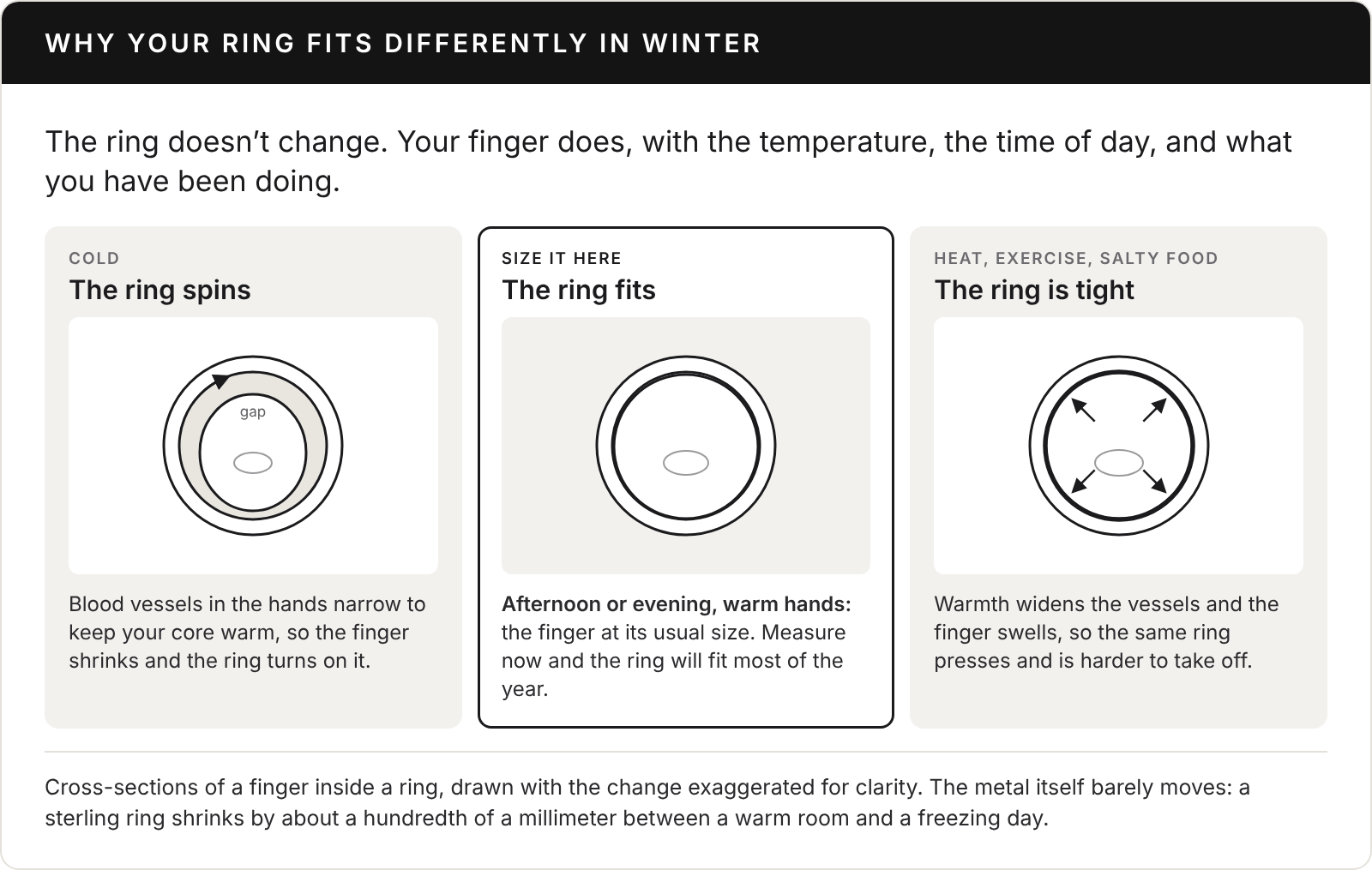
The ring itself barely changes. Sterling silver does contract in the cold, but across a typical men’s ring the difference between a warm room and a freezing day is about a hundredth of a millimeter, far less than the change in your finger.
Loose for the season, or too big?
A ring that fits slides over the knuckle with slight resistance, sits at the base of the finger without spinning freely, and comes off with a gentle twist, as our ring size guide explains. Run that test on a warm evening, not a cold morning.
- Loose only in the cold. It spins outdoors or first thing in the morning, but meets the knuckle with resistance on a warm evening. It fits; leave the size alone.
- Loose all year. It slides over the knuckle with no resistance even when your hands are warm. That ring is too big; see when to resize, below.
- Tight in summer. The same swing in reverse. If a ring won’t come off, our guide to getting a stuck ring off covers the safe methods.
When a loose ring is a risk
The real cost of a winter-loose ring is losing it, and it tends to happen when your hands are cold and something pulls at the ring. Take it off before:
- Heavy gloves or mittens, which can drag a loose ring off when you pull them off.
- Snow: shoveling, sledding, or skiing, where a ring that slips off is gone until spring.
- Cold water: a lake, the ocean, or rinsing your hands in a cold stream.
Put it in a zipped pocket or a small pouch, not loose in a coat. Our guide to wearing a silver ring every day covers the other times to take it off.
Quick fixes that don’t change the ring
- Switch hands. The same finger on your dominant hand is usually about half a size larger, as our ring size guide notes, so a ring that spins on one hand may sit still on the other for the winter.
- A silicone sizer. A clear silicone or vinyl sleeve that fits inside the band takes up the gap and comes out in spring. Slide it out now and then to clean underneath, because it traps soap and water against the skin.
- Sizing beads. A jeweler can add two small metal beads inside the band, which hold the ring still at the base of the finger, Jewelers Mutual notes.
- A ring guard. A jeweler can fit a guard or sizer insert into the band, which tightens the fit without permanently changing the ring.
- Adjustable rings: set them once. Tightening an adjustable ring each winter and opening it again each spring bends the silver back and forth, which hardens it and can eventually crack it, as our adjustable ring guide explains. Use a silicone sizer instead.
When to resize instead
If the ring is loose even on a warm evening, resize it. Rings can generally be taken up or down by as much as two sizes, according to Jewelers Mutual, though plated and enamel-coated rings can’t be resized, and making a ring smaller costs less than making it bigger, because enlarging adds metal. Before you book it, measure again on two or three warm evenings, so you don’t size the ring to one cold day.
How to size a ring that fits all year
- Measure in the afternoon or evening. Finger size is most stable after lunch and before dinner, Blue Nile says, and fingers are largest by the end of the day.
- Warm hands, room temperature. Not just after coming in from the cold, and not straight after exercise or a hot shower.
- Measure on more than one day, and take the size that comes up most often.
- Allow for the band and the knuckle. Go up a half size for a band 6 mm or wider, and size between the finger and the knuckle if the knuckle is bigger, as our ring size guide shows.
FAQ
Is it normal for my ring to be loose in winter?
Yes. In the cold, your body cuts blood flow to your hands to keep your core warm, so your fingers shrink a little and a ring that fits in milder weather can spin.
Should I resize my ring for winter?
Usually not. If it still meets the knuckle with some resistance on a warm evening, it fits, and a ring resized for winter will be tight in summer. Use a silicone sizer or a ring guard for the cold months instead.
How do I keep my ring from falling off in the cold?
Wear it on your dominant hand, add a clear silicone sizer, or have a jeweler fit sizing beads or a ring guard. And take it off before heavy gloves, snow, or cold water.
Why is my ring tight in summer?
Warmth widens the blood vessels in your hands, so your fingers swell, and exercise and salty food add to it. If the ring is comfortable on a mild evening, it fits.
Does sterling silver shrink in the cold?
Very slightly. Across a typical men’s ring, the difference between a warm room and a freezing day is about a hundredth of a millimeter. It is your finger that changes size.
Can I wear a silicone ring sizer every day?
Yes, but slide it out now and then to clean the ring and the sizer, because it traps soap and water against the skin. Take it out in spring, when the ring fits on its own again.
Bottom line
A ring that spins in January but meets your knuckle with some resistance on a warm evening is the right size. Keep it on with a silicone sizer, sizing beads, or a switch of hands, take it off before snow and cold water, and save resizing for a ring that is loose even when your hands are warm.
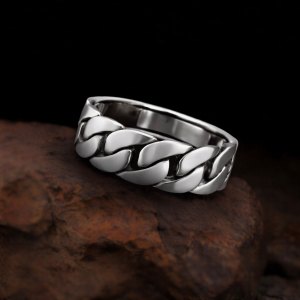
From the collection
Men’s sterling silver rings by Ronatelli
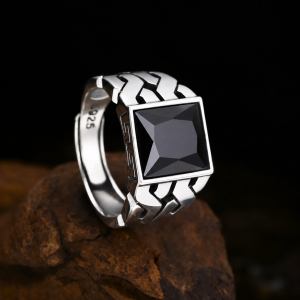
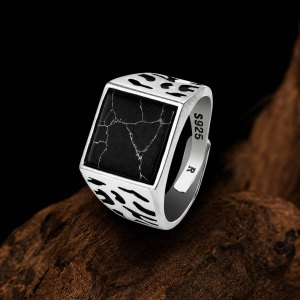
Eleven handmade 925 rings, $129 to $169, from a chain-link band to a black onyx statement ring. Every one is adjustable.
Related guides
This article is general information, not medical advice. How cold affects blood flow to the hands follows Cleveland Clinic; temperature and time-of-day effects on finger size follow Blue Nile; the short-term causes, sizing beads, ring guards, and resizing limits follow Jewelers Mutual’s guide to resizing a ring; and the fit test and sizing rules follow our ring size guide. The contraction of the metal is our calculation for an 18 mm sterling ring over a 30°C (54°F) drop, using silver’s standard expansion coefficient. All were checked on October 30, 2026. Read our editorial policy.

