
Disclosure:The example rings in this guide are from Ronatelli. Prices, ratings, and product details were read from ronatelli.com on October 29, 2026; the care advice applies to any brand.
Yes. A sterling silver ring is made to be worn, and one you wear every day stays brighter than one kept in a drawer, because wear rubs off the first film of tarnish before it can build. A ring also has a harder life than any other piece of jewelry: it goes through every hand wash, every squirt of sanitizer, and every grip. What it can’t take is chlorine, harsh cleaning products, and the force of a barbell or a machine. This guide goes through hand washing and sanitizer, the shower, housework, the gym, pools and the sea, and sleep one at a time, then covers stone, darkened, and plated rings, what a year of daily wear does, and when to clean.
Key takeaways
- Wear it every day. Wear keeps a ring bright; the rings that go black are the ones left in a drawer.
- Water is fine; chemicals aren’t. Wash your hands and shower with it on, then dry it. Take it off for bleach, ammonia, and the pool.
- Let sanitizer dry. Alcohol gels don’t harm silver, but alcohol-free ones can contain chlorine compounds that tarnish it.
- Take it off to lift and to use tools. A bar can dent a band, and a ring caught in a machine can injure the finger.
- Check the back and the stone. Now and then, look at the ring’s shape, the back of an adjustable band, and any prongs.
In this guide Short answer Hand washing Shower Housework Gym and tools Pool and sea Sleep Stones and finishes A year of wear Cleaning Examples FAQ
The short answer: yes, with a few exceptions
A plain sterling ring can stay on through most of a day: work, the commute, every hand wash, a run, and the shower if you dry it afterward. The exceptions come in two kinds. Some things attack the metal: chlorine, bleach, and ammonia. Others put force on the ring: a barbell, a machine, a tackle. Sanitizer and a night in bed sit in between: usually fine, with a little care.
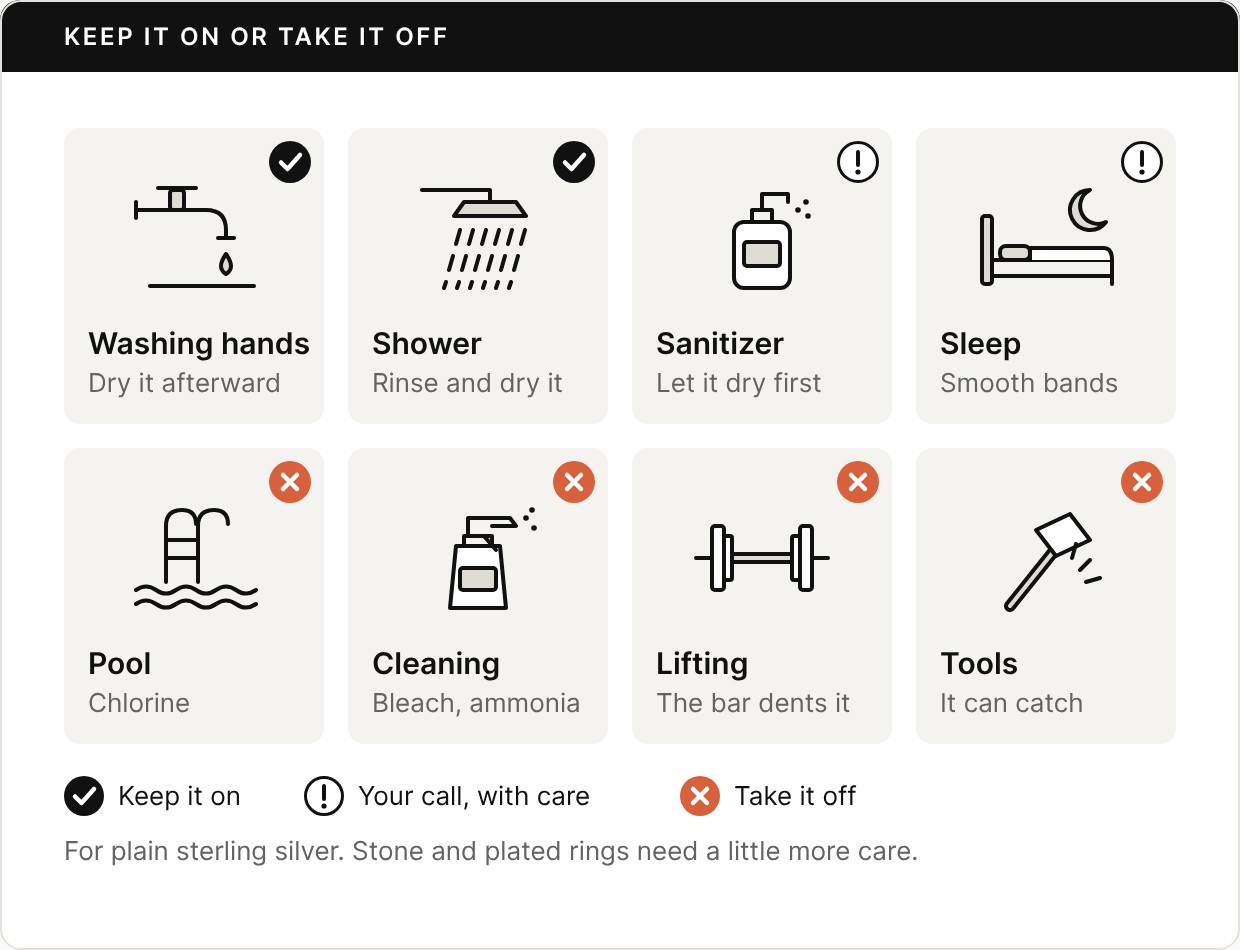
| Activity | Keep it on? | What to do |
|---|---|---|
| Washing hands and dishes | Keep it on?Yes | What to doDry it afterward, including the back of the band |
| Hand sanitizer | Keep it on?Yes, once it’s dry | What to doRub it in until your hands are dry |
| Shower | Keep it on?Yes, or take it off | What to doRinse off the soap and dry it |
| Cleaning with bleach or ammonia | Keep it on?No | What to doThey attack the alloy and can pit it |
| Cooking with eggs, onions, or garlic | Keep it on?Your call | What to doTheir sulfur tarnishes silver; wash and dry it after |
| Running and cardio | Keep it on?Yes | What to doRinse off the sweat and dry it |
| Lifting | Keep it on?No | What to doThe bar presses on the band and can dent it |
| Tools and machinery | Keep it on?No | What to doA caught ring can injure the finger |
| Ball and contact sports | Keep it on?No | What to doA finger can be caught or pulled |
| Pool or hot tub | Keep it on?No | What to doChlorine tarnishes sterling; heat speeds it up |
| The sea | Keep it on?Not to swim | What to doCold water shrinks fingers, and a ring can slip off |
| Sleep | Keep it on?Your call | What to doA smooth band; take off stone rings and prongs |
Hand washing and sanitizer
A ring is the one piece of jewelry that goes through every hand wash, and that is fine. Water doesn’t harm sterling silver, and warm water with a drop of mild dish soap is exactly how our cleaning guide cleans it. What builds up is the film the soap leaves behind. It settles where a towel doesn’t reach: under a stone, in the recesses of a pattern, and in the gap or overlap at the back of an adjustable band, which our adjustable ring guide notes collects soap and skin oil. Dry the ring when you dry your hands, and wash it properly every couple of months. Ronatelli’s care advice is the same for every piece: if it gets wet, dry it with soft materials.
Hand sanitizer depends on the kind. Alcohol-based gels, the kind the CDC recommends at 60% alcohol or more, are benign to jewelry, Stuller metallurgist Shan Aithal told JCK; alcohol-free sanitizers typically use chlorine-based compounds as germicides, and free chlorine can tarnish jewelry, especially sterling silver. Either kind can leave a film on stones that dulls them over time, though it isn’t permanent. Our tarnish guide adds that frequent use dulls rings, so rub sanitizer in until your hands are completely dry, or slip the ring off first, and rinse the ring the next time you wash your hands.
Hand cream works the same way. Our tarnish guide puts lotion among the things that leave a film and trap moisture against silver, and Ronatelli’s FAQ says to let cosmetics dry before you put jewelry on and to put jewelry on last.
In the shower: fine, if you dry it
Plain water does a sterling ring no harm. Soap and shampoo leave a film that dulls it, as our ring buying guide notes, and hard water adds chalky spots. If you keep it on, let clean water run over the ring last, then dry it in the towel, inside and out, and around the back of the band.
Taking it off is less work, and it is the better habit for two kinds of ring. A plated ring loses its plating faster to daily soap and water, and a ring set a little loose slips off a soapy finger more easily than a dry one, which in a shower means the drain. Give it a spot by the sink, out of the splash.
Housework and cooking
Housework is where a ring meets the chemicals that actually damage silver. Bleach, ammonia, and acetone, the solvent in most nail polish removers, attack the alloy, pit the surface, and destroy finishes and stones, according to our cleaning guide, and Ronatelli’s lifetime warranty excludes damage from harsh chemicals, naming chlorine, bleach, and aggressive detergents. Take the ring off before you clean, not after. Don’t keep it on under rubber or latex gloves either: our tarnish guide lists both among the materials that release sulfur compounds, the cause of tarnish.
In the kitchen, eggs, onions, garlic, and mayonnaise release hydrogen sulfide, and our tarnish guide suggests taking rings off to cook and eat them. Kneading dough or mixing food by hand also works it into a pattern and under a stone, which is another reason to set the ring aside. Washing up is fine: dish soap is what cleans silver, so just dry the ring afterward.
At the gym, and with tools
Sweat is a cosmetic problem. It carries salt and sulfur compounds, so a ring worn through workouts tarnishes faster, and on some people much faster than on others, as our tarnish guide explains. Rinse it in plain water afterward and dry it. Fingers also swell after exercise, our ring size guide notes, so a ring that fits at rest can feel tight by the end of a run; if it does, take it off rather than forcing it.
Lifting is different, because the risk is force rather than sweat. Our ring buying guide’s advice is to take rings off for weight training, and the reasons are mechanical:
- The bar. A grip presses the band between the steel and your finger under the full load. A thin band can be dented or pushed out of round, as our ring buying guide notes.
- The knurling. The rough crosshatch on a bar’s grip is steel, which is harder than sterling, so it scratches the polish.
- The back of the band. An adjustable ring is made to bend by hand, so a hard grip can squeeze it into an oval. Our adjustable ring guide shows how to press it back into a circle, and why bending it back and forth weakens it.
- Stones and prongs. A dumbbell or kettlebell handle knocks against a stone and can bend a prong; our guide to black onyx rings explains which settings protect a stone best.
- Machines and plates. A ring can catch on a pin, a cable, or the edge of a plate.
That last risk is the reason to take a ring off for tools and machinery too. A ring avulsion, an injury that happens when a ring is suddenly pulled with force, is rare, Cleveland Clinic says, but it is serious. It happens when a ring is caught in a machine or on equipment, on a fence or the edge of a counter in a fall, and in sports, such as a finger pulled in a tackle. Cleveland Clinic’s advice is to remove rings before working with tools or heavy equipment and before activities that could be dangerous, and to avoid loose rings, which have more room to catch. It adds that there is some evidence a silicone ring can help prevent these injuries, though experts are still studying it. For the gym or a job with tools, a silicone band is a practical stand-in.
While you train, keep the ring in a zipped pocket of your bag, not loose with your keys and a padlock, which scratch it.
Pools, hot tubs, and the sea
Chlorine is the one everyday exposure that damages sterling rather than just tarnishing it. Fine and sterling silver are highly reactive to chlorine and will tarnish and corrode rapidly, according to Skyjems, and repeated swims leave a ring dull and, in time, pitted. The CDC recommends at least 1 part per million of free chlorine in a pool and at least 3 in a hot tub, and Skyjems adds that a hot tub’s heat speeds the reaction considerably. Rings with stones have a second problem: Skyjems notes that chlorine weakens prongs and solder joints, often before any damage shows on the surface, and that is how stones work loose and are lost. Take the ring off before you get in.
The sea is gentler on the metal and harder on your chances of keeping the ring. Salt water speeds tarnish and sand scratches the polish. Cold water also shrinks your fingers, as our ring size guide explains, so a ring that fits on land can slide off in the waves, and an adjustable ring set a little loose most of all. Leave it with your things, and if it does go in, rinse it in fresh water and dry it the same day.
If a ring has been in a pool, rinse it, dry it, and go over it with a polishing cloth. If it still looks gray, wash it in warm, soapy water; plain sterling that has gone dark can go in the baking soda and foil bath our cleaning guide describes. For a ring you can swim in without a thought, stainless steel or titanium does the job; our metals comparison covers the trade-offs.
In bed: it depends on the ring
Many men never take a ring off, and a smooth, comfortable band usually comes through a night unharmed. The case for taking it off is about what a ring catches. Overnight your hands slide under pillows and across sheets, and a raised stone or a prong snags fabric and hair; the ends of an open back can catch the same way, as our adjustable ring guide notes. AGTA, the American Gem Trade Association, advises taking onyx off before sleeping, as with all fine jewelry.
- Fine to sleep in, if you want to: a plain or lightly textured band with smooth edges, snug enough that it doesn’t spin.
- Take off: stone rings, especially those held by prongs; signets with a raised face; and any ring that already feels tight by evening, since fingers swell during the day and in heat, as our ring size guide explains.
- Check an adjustable back first. The ends should be smooth and rounded, and on an overlapping back the seam should lie flat. Every Ronatelli ring is adjustable, so this applies to all of them.
- Give it a home. Use a small dish on the nightstand, so the ring is in the same place every morning.
Stone, darkened, and plated rings
Everything above is for plain sterling. Three kinds of ring need a little more care.
- Stone rings. Black onyx is durable, with a hardness of 7, and AGTA’s advice is to clean it with warm water and mild dish soap, so hand washing does it no harm. The setting is the weak point: take a stone ring off for the gym, the pool, and yard work, and check now and then that every prong still lies flat on the stone. Our guide to black onyx rings covers each setting. Porous or soft stones, such as turquoise, opal, and malachite, shouldn’t be soaked at all, our cleaning guide says, so keep those rings out of the water.
- Darkened rings. Some rings are darkened in the recesses on purpose, such as Ronatelli’s Etna and Kleos. Daily wear brightens the high points and leaves the recesses dark, which is the intended effect, as the finishes table in our ring buying guide explains. Clean them with soap and water, and run the cloth over the raised surfaces only; the foil bath and silver dips lift the dark finish. Our guide to oxidized silver covers how it ages.
- Plated rings. Rhodium plating keeps tarnish off for as long as it lasts, but on a ring it wears through faster than on a chain, from constant friction, and needs re-plating every year or two, our ring buying guide notes. Take a plated ring off for the shower, housework, and the gym, and clean it with soap and water and the soft side of a polishing cloth only.
What a year of daily wear does
A ring worn every day for a year doesn’t look new, and it isn’t meant to. Rings hit more things than any other jewelry, as our ring buying guide puts it, so most of the change shows on the outside of the band, and almost all of it is cosmetic.

- Polish. A high polish shows scratches within weeks, then settles into a soft sheen. A polishing cloth softens the marks, and a jeweler can refinish a band in minutes.
- Texture. A rough or hammered surface hides wear best of all: every mark blends in.
- Darkened patterns. The raised surfaces wear bright and the recesses stay dark, which sharpens the pattern.
- The inside. Even on a ring worn every day, the inside of the band and any recesses darken. Warm water and mild soap bring them back.
- The shape. Look at the ring side-on. A hard knock can push a thin band out of round, and a hard grip can squeeze an adjustable one into an oval; a jeweler can true either on a ring mandrel.
- The back and the stones. On an adjustable ring, a fine line or a crack at the back means it is time to stop adjusting it and see a jeweler. Check that the prongs still sit tight and that small stones haven’t moved.
Check the warranty before you need it. Ronatelli’s lifetime warranty, for example, covers manufacturing faults such as weak soldering points, but not general wear, dents, or major scratching from daily activities, bending, or damage from harsh chemicals such as chlorine and bleach, and it says plainly that tarnish is normal, not a defect.
When to clean a ring you wear every day
A ring you wear needs less cleaning than one in a drawer, because wear rubs off tarnish before it builds. Our cleaning guide gives the rhythm for jewelry worn daily:
- Monthly: a polishing cloth. Go over the outside of the band, then the inside. On a darkened ring, stay on the raised surfaces; on a plated ring, use the soft side only.
- Every two or three months, or when it looks dull: warm water, a drop of dish soap, and a soft toothbrush around the stone, into the pattern, and through the back of the band, then a rinse and a thorough dry. Put the plug in the sink first.
- The same day: a rinse in clean water and a dry after the pool, the sea, or a hard workout.
- Rarely, if ever: the baking soda and foil bath, for plain sterling that has gone dark. Not for stone-set, darkened, or plated rings.
Our guide to why sterling silver tarnishes covers storage for the nights a ring comes off, and our guides to wearing a silver bracelet or a silver chain every day cover the rest of what you wear.
Rings for every day at Ronatelli
A ring that is easy to wear every day has nothing to catch, a finish that hides wear, and a back you can set once and leave. Here are five examples from Ronatelli’s ring collection, at their listed prices. All five are adjustable, in 925 sterling silver.
| Ring | Why it suits every day | Watch out for | Price |
|---|---|---|---|
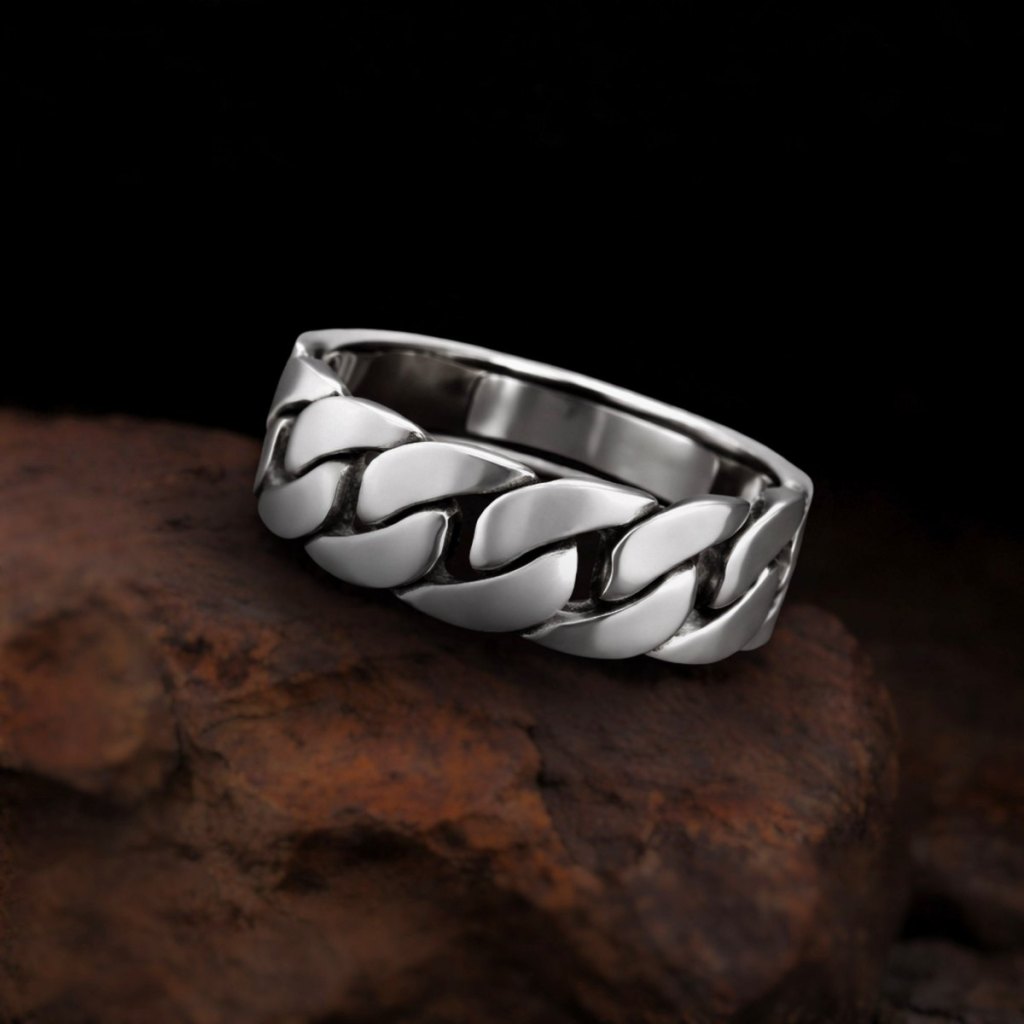
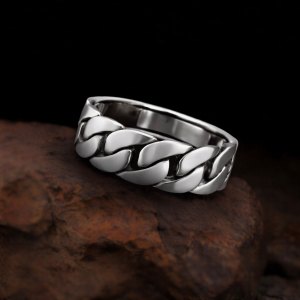
| Torin: Chain Link Ring | Why it suits every dayPolished links with no stone or prongs; the back slides under the links | Watch out forPolish shows fine scratches first | Price$129 |
| Nexus: Braided Band Ring | Why it suits every dayAn all-silver braid with no stone or prongs | Watch out forSoap collects in the braid; wash it every couple of months | Price$129 |
| Etna: Rock Texture Band Ring | Why it suits every dayA rough texture that hides the marks of daily wear | Watch out forDarkened recesses: no foil bath or dips | Price$129 |
| Kleos: Greek Key Band Ring | Why it suits every dayA darkened pattern that sharpens as the high points brighten | Watch out forDarkened recesses: no foil bath or dips | Price$149 |
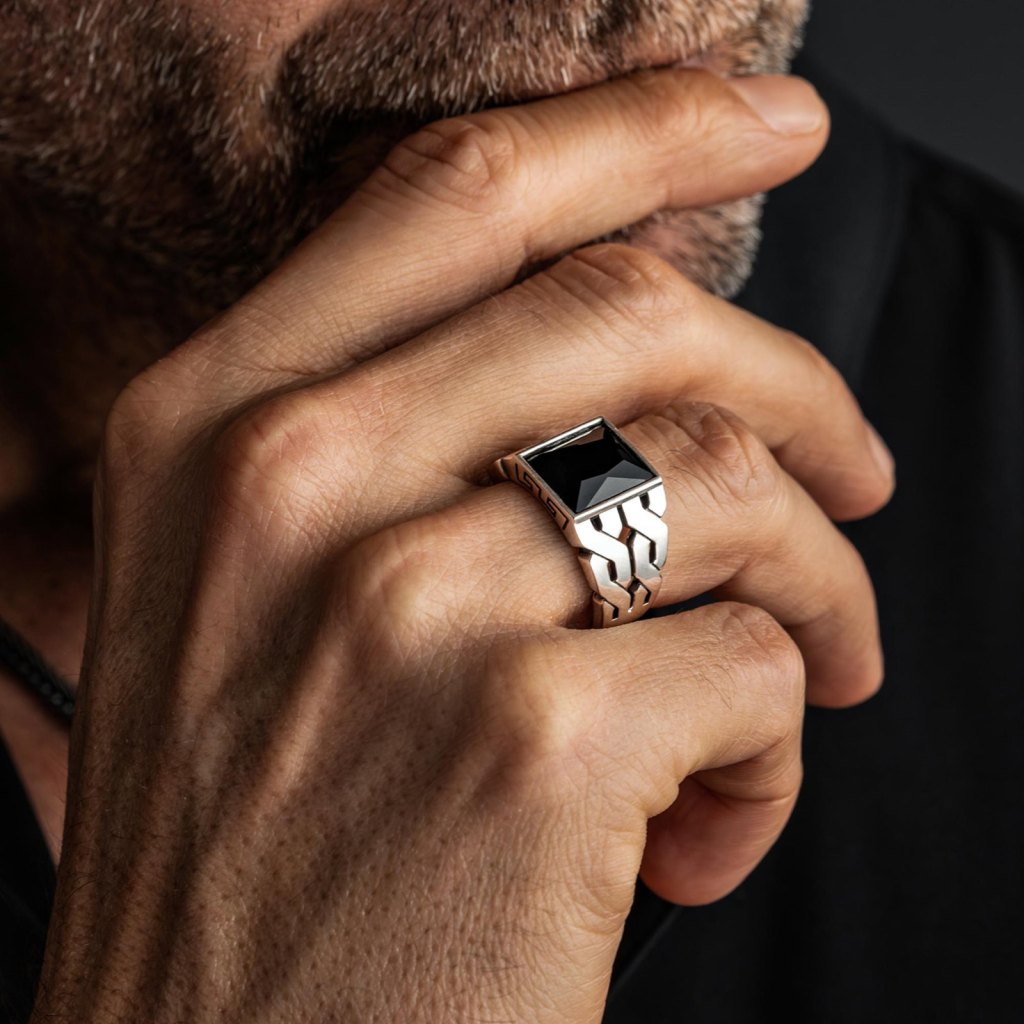
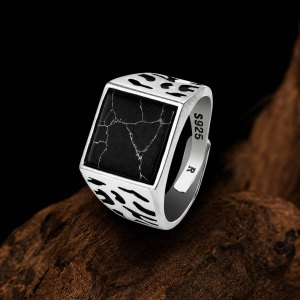
| Ragnar: Square Black Onyx Ring | Why it suits every dayA frame that wraps the edges of the onyx | Watch out forA stone ring: off for the gym and the pool | Price$149 |
The Torin is the one to start with if you never want to take it off: all silver, polished, and with nothing to snag. The Etna is the low-maintenance choice, because its texture hides what a year of wear leaves behind and its dark recesses are meant to stay dark. If you want a stone, the Ragnar’s frame protects the onyx better than prongs do, as our comparison of Ronatelli’s rings explains, and it is the collection’s best seller, with 93 reviews at 4.7; take it off for the gym and the pool.

FAQ
Can you shower with a sterling silver ring?
Yes, if it is plain sterling. Water doesn’t harm it. Rinse the soap off and dry the ring afterward, or take it off, which saves cleaning the film out of the pattern later. Take plated rings off for the shower.
Can you wear a silver ring to the gym?
For cardio, yes: rinse off the sweat and dry it afterward. Take it off for lifting, where the bar can dent the band and scratch the polish, and for work with machines, where a caught ring can injure the finger.
Does hand sanitizer damage silver rings?
Alcohol-based sanitizer doesn’t harm the metal. Alcohol-free sanitizers often use chlorine compounds, which can tarnish sterling, and either kind can leave a film on stones. Rub it in until your hands are dry, and rinse the ring when you next wash your hands.
Can you sleep with a silver ring on?
A smooth band usually comes through a night unharmed. Take off stone rings and rings with prongs, which catch on sheets and hair; AGTA advises taking fine jewelry off before sleeping.
Can you swim in the sea with a silver ring?
Better not. Salt water speeds tarnish, and cold water shrinks your fingers, so a ring can slip off in the waves. If it does go in, rinse it in fresh water and dry it the same day. Keep it out of pools and hot tubs altogether.
Why is the inside of my silver ring turning dark?
The inside of the band sits against skin all day, in sweat and soap, which carry the sulfur that tarnishes silver, so it darkens even when the outside stays bright. It is harmless; warm water and mild soap bring it back. A faint dark mark on your finger is the same tarnish rubbing off, as our tarnish guide explains, and it washes off.
Bottom line
Wear it. A plain sterling ring can stay on through hand washing, sanitizer once it has dried, and the shower, as long as you dry it. Take it off for bleach and ammonia, pools and hot tubs, lifting, and work with tools or machinery, and for bed if it has a stone, prongs, or a back that catches. Wipe it monthly, wash it every couple of months, and now and then check its shape, the back of the band, and the stone.
From the collection
Men’s sterling silver rings by Ronatelli
Eleven handmade 925 rings, $129 to $169, from a chain-link band to a black onyx statement ring. Every one is adjustable.
Related guides
Chlorine levels are the CDC’s recommendations for pools and hot tubs; the effect of chlorine on silver, prongs, and solder follows Skyjems; the sanitizer advice follows JCK’s interview with Stuller metallurgist Shan Aithal; ring avulsion and its prevention follow Cleveland Clinic; the onyx care advice follows the American Gem Trade Association (AGTA). The tarnish chemistry, finishes, sizing, and cleaning methods follow our tarnish, ring buying, ring size, adjustable ring, and cleaning guides. Ronatelli’s care advice and warranty terms come from its FAQ and lifetime warranty pages, and its prices, ratings, and product details from its product pages, all checked on October 29, 2026. Read our editorial policy.

