Yes, if the piece is plain, solid sterling. An ultrasonic cleaner is one of the best ways to get grime out from between chain links and the details of a band, and solid silver takes it without harm. Keep out anything with a stone, pearls, an oxidized finish, plating, glue, or cord: the vibration and the solution can loosen, strip, or damage them. And know what the machine doesn’t do. It lifts dirt, not tarnish, so a polishing cloth still finishes the job.
Key takeaways
- Plain sterling: yes. Chains, bands, cuffs, and ID bracelets with no stones or dark finish clean well in an ultrasonic.
- Stones: no. The vibration can loosen them, and many stones are treated in ways the machine can damage. Onyx included.
- Finishes and coatings: no. It speeds the loss of an oxidized finish and the wear of plating.
- Pearls, glue, and cord: never. GIA says pearls should never go in an ultrasonic or steam cleaner.
- It won’t remove tarnish. Rinse, dry, and finish with a polishing cloth.
In this guide Short answer How it works What can go in What stays out Step by step Tarnish Home or jeweler FAQ
The short answer
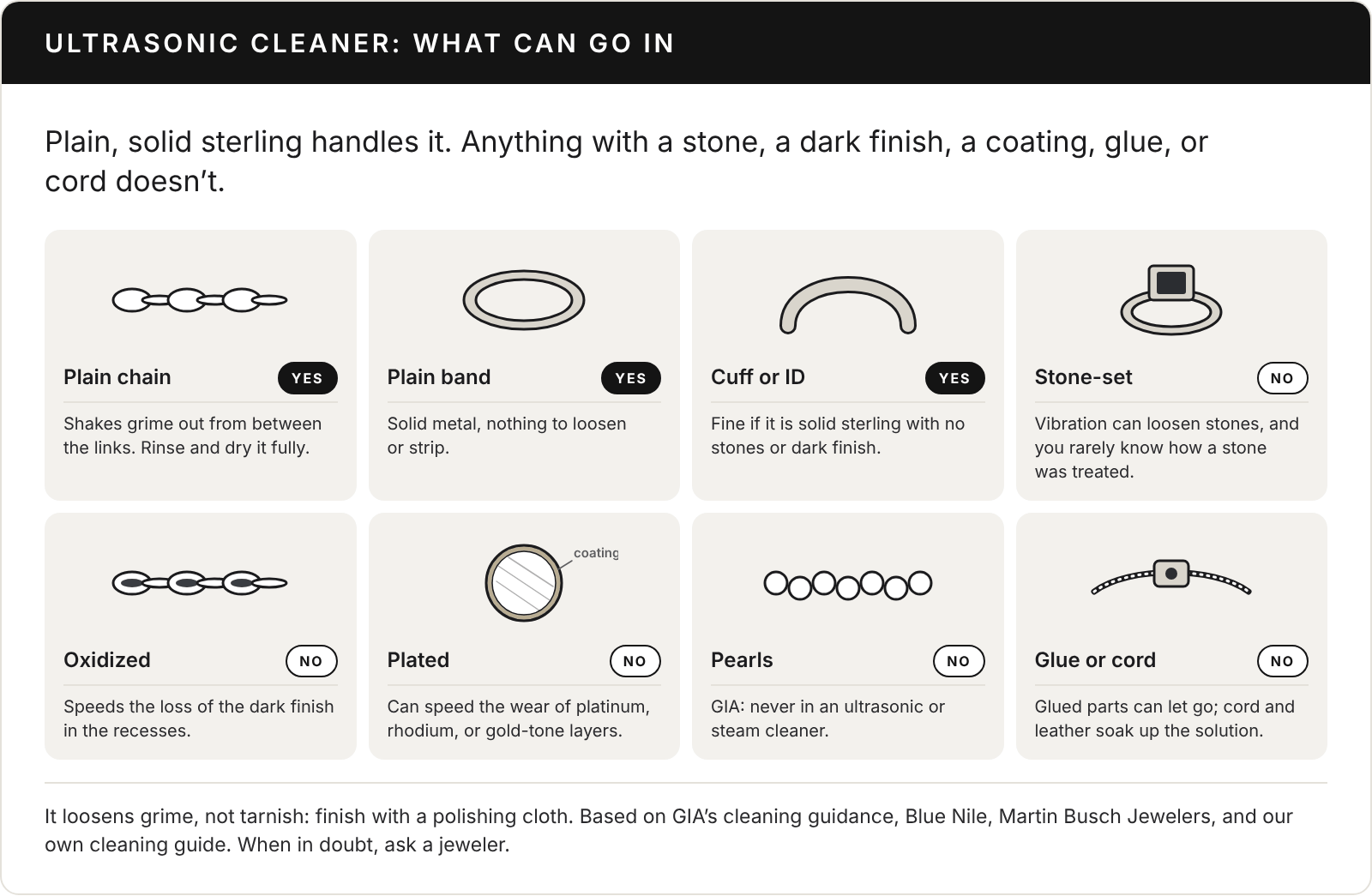
Our guide to cleaning sterling silver puts it in one line: ultrasonic cleaners are fine for plain sterling chains, bands, and cuffs in warm water with a drop of dish soap, and not for stones, pearls, glued parts, or oxidized pieces. The chart sorts the common cases.
How an ultrasonic cleaner works
An ultrasonic cleaner is a small tank of water or cleaning solution with a transducer underneath. As GIA describes it, the machine generates high-frequency sound waves that travel through the liquid and dislodge dirt from behind gems and other hard-to-reach places. The waves form countless tiny bubbles that collapse against every surface, an effect called cavitation, and that is what scrubs where a brush can’t reach: inside a chain’s links, under a setting, along an engraving.
The same vibration is the risk. GIA’s care guide warns that it “can sometimes shake gems loose or chip gems,” and the liquid reaches every crack, coating, and glued joint in a piece. Solid silver has none of those, which is why it handles the machine so well.
What can go in
- Plain sterling chains. Curb, cable, rope, box, foxtail, or Byzantine: any solid, bright chain with no stones or dark finish. The machine reaches between the links, where skin oil and soap film collect.
- Plain bands and solid rings. A band with no stone and no blackened detail is about the easiest thing to clean in one.
- Cuffs and ID bracelets. Fine if they are solid sterling throughout, unless an engraving has been darkened to make it stand out. That dark fill is an oxidized finish, and it belongs in the next list.
Solid matters. A hollow chain can hold solution inside its links, so if one goes in, rinse it well and let it dry completely before you wear or store it.
What stays out
| Piece | Why not | Clean it with |
|---|---|---|
| Onyx or other stone-set rings | Why notVibration can loosen stones; dyed or treated stones may not take it | Clean it withWarm water, mild dish soap, and a soft brush |
| Oxidized or antiqued silver | Why notSpeeds the loss of the dark finish | Clean it withSoap and water; a polishing cloth on the high points only |
| Plated pieces and gold-tone details | Why notCan speed the wear of the plating | Clean it withSoap and water and a soft cloth |
| Pearls | Why notGIA: never in an ultrasonic or steam cleaner | Clean it withA very soft cloth after each wearing |
| Glued parts, leather, or cord | Why notGlue can let go; cord soaks up the solution | Clean it withA damp cloth on the metal only |
| Antique or fragile pieces | Why notVibration can dislodge stones or damage solder points | Clean it withA jeweler |
Each of those comes from a specific risk. Blue Nile warns that an ultrasonic can “speed up the wearing away of any plating,” which covers platinum- and rhodium-plated chains and gold-tone details alike. GIA recommends gentle solutions or warm, soapy water for oxidized or antique metals. And the jeweler Martin Busch Jewelers notes that glued or epoxied jewelry “can fall apart in an ultrasonic cleaner” and that the vibration can damage solder points on antique pieces.
Onyx needs a word of its own. JCK considers ultrasonic cleaning safe for permanently treated onyx, but you can’t know how yours was treated, and Skyjems advises against it if dye is suspected, which is why our guide to black onyx rings says no. GIA’s list of what to keep out runs wider: porous organic gems such as pearl, coral, jet, and amber; stones treated with oil, wax, or resin, such as emerald, opal, lapis lazuli, and malachite; and heat-sensitive stones such as tanzanite, moonstone, and turquoise. If you don’t know what a stone is or how it was treated, keep it out.
How to use one on silver
- Check the piece. Plain, solid sterling only. Look over the clasp and jump rings first; if anything is loose or cracked, take it to a jeweler instead.
- Fill the tank. Warm water with a drop of mild dish soap, or the solution the maker recommends. Follow the machine’s instructions, as GIA advises.
- Use the basket. Lay the piece in the basket and don’t pile pieces on top of each other; silver scratches against silver.
- Run one short cycle, then look. Most grime comes off the first time. One jeweler on the Ganoksin forum puts the rule simply: “don’t leave silver in too long.”
- Rinse and dry. Rinse in clean water to remove the soap, then dry fully with a soft cotton cloth, paying attention to the clasp and the inside of the links.
- Finish with a cloth. Buff with a polishing cloth to bring back the shine and lift any tarnish.
It cleans grime, not tarnish
Tarnish is a thin dark layer of silver sulfide that forms when silver reacts with sulfur compounds in the air, as our guide to why sterling silver tarnishes explains. An ultrasonic cleaner shakes off dirt, skin oil, and soap film, but it doesn’t reverse that layer, so a chain can come out clean and still look dull.
A polishing cloth handles light tarnish. For heavy tarnish on plain sterling, the baking soda and foil bath in our cleaning guide converts the tarnish back to silver without removing metal. Neither is for oxidized pieces, stones, or plating.
Home machine or jeweler?
A home unit earns its place if you own several plain sterling chains and bands and clean them often. GIA notes that a machine can cost $150 or less, but adds that this kind of cleaning “is best left to jewelry professionals who know about different gem materials.” For anything with a stone, the safer routine is soap and water at home and a professional clean now and then. GIA suggests having jewelry checked every six months, and many jewelers will check and clean pieces for free at set intervals.
FAQ
Can you put sterling silver in an ultrasonic cleaner?
Yes, if it is plain, solid sterling with no stones, pearls, oxidized finish, plating, glue, or cord. Chains, bands, cuffs, and ID bracelets usually qualify.
Will an ultrasonic cleaner remove tarnish from silver?
No. It removes dirt, oil, and soap film, not the silver sulfide layer that is tarnish. Follow it with a polishing cloth, or a foil bath for heavy tarnish on plain pieces.
Can I put a silver chain in an ultrasonic cleaner?
Yes, if it is solid sterling and not oxidized or plated. Check the clasp first, lay the chain in the basket, and dry it fully afterward, especially if it is hollow.
Can you put an onyx ring in an ultrasonic cleaner?
Better not. Some onyx tolerates it, but you can’t tell how a stone was treated, and the vibration can loosen any setting. Use warm water, a drop of mild dish soap, and a soft brush.
How long should silver stay in an ultrasonic cleaner?
Start with one short cycle on your machine, then check the piece and repeat only if it needs it. Follow the manufacturer’s instructions for time and solution.
Is ultrasonic cleaning safe for oxidized silver?
No. It speeds the loss of the dark finish. GIA recommends gentle solutions or warm, soapy water for oxidized or antique metals, and our guide to oxidized silver chains keeps the polishing cloth on the high points only.
Bottom line
Plain, solid sterling is one of the few things an ultrasonic cleaner can’t hurt: chains, bands, cuffs, and ID bracelets come out clean in a cycle or two. Everything else, from stones and pearls to oxidized finishes, plating, glue, and cord, gets soap and water instead. Rinse, dry thoroughly, and finish with a polishing cloth, because the machine removes grime, not tarnish.

From the collection
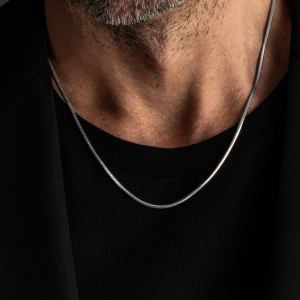
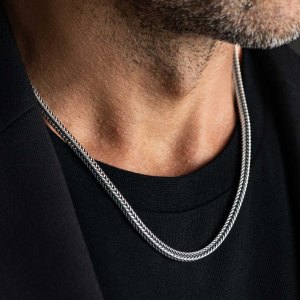
Men’s sterling silver chains by Ronatelli
Ten handmade 925 chains, from a 2 mm snake chain to a 7 mm curb, in 20 to 26 inches. Every length is the same price.
Related guides
How ultrasonic cleaners work, the gems to keep out, and the advice on oxidized metals and professional cleaning follow GIA’s guides to ultrasonic cleaners and jewelry care; the plating warning follows Blue Nile; the warnings on glued and antique pieces follow Martin Busch Jewelers; and onyx follows JCK and Skyjems, as in our onyx guide. Sources were checked on October 30, 2026. Read our editorial policy.

