Disclosure:The price example in this guide is from Ronatelli. Prices were read from ronatelli.com on October 30, 2026; the advice applies to any brand.
Not as a gemstone. Black onyx is chalcedony, a common form of quartz, and almost all of it is gray stone dyed black, so the stone itself costs little: in 2002, the trade magazine JCK reported standard onyx tablets for men’s rings selling for about $1 to $15 apiece. What you pay for in an onyx ring is mostly the making (the design, the setting, and the work) and the seller’s margin, with the silver as a floor under the price. That is also where the quality differences are, so the checks worth making before you buy are about the stone’s finish, the setting, and the metal more than the onyx itself.
Key takeaways
- Onyx is an affordable gem. It can form in large masses, which the International Gem Society says contributes to its relative affordability, and almost all black onyx on the market is dyed chalcedony.
- The stone is likely a small part of a ring’s price. In 2002, JCK put standard onyx tablets for men’s rings at about $1 to $15 apiece. The making, the seller’s margin, and the silver account for most of the rest.
- Natural black onyx is rare, but rarely the question. Unless a lab report says a stone is untreated, assume it is dyed; the usual sugar-and-acid treatment is permanent.
- Quality is checkable. Look for an even black, a glassy polish, clean edges, a stone that sits tight, a stamped 925 band, and a seller who names the stone.
- Buy it to wear, not to resell. Sold on, an onyx ring is worth its silver, or what a buyer will pay for it as secondhand jewelry.
In this guide Why it’s affordable Natural or dyed What you pay for Quality checks Resale FAQ
Why black onyx is affordable
Onyx is a variety of chalcedony, the fine-grained form of quartz, as our black onyx rings guide explains, and chalcedony is not scarce. Like other chalcedonies, onyx “can form in substantial masses weighing several pounds,” the International Gem Society (IGS) notes, and “this abundance contributes to onyx’s relative affordability compared to other gemstones with similar aesthetic appeal.”
The second reason is that the black is usually made, not mined. “Almost all black onyx in the market is dyed low grade chalcedony,” gemologist Çiğdem Lüle writes in GemGuide’s Gem Focus, and the IGS says dyeing is so pervasive that most gem reports note black onyx as “probably dyed.” With plenty of gray chalcedony to dye, there is no shortage of perfect black stone.
The stones themselves reflect that. Writing in JCK in 2002, gemologist Gary Roskin reported that “standard tablets for men’s rings are sold by the measurement for approximately $1 to $15 per piece.” Those are 2002 figures, not today’s prices, but his view of quality still holds: “There is not much difference from one gem to the next. You either like it, or you don’t.”
Natural or dyed: does it change the value?
Naturally black onyx exists, but it is uncommon. Onyx usually forms in thin layers, and a “pure black variety that occurs naturally with thick enough layers to cut as a solid color is quite rare,” the IGS says. Roskin agrees: “Pure black chalcedony is rare.”
In practice, the question rarely comes up when you buy a ring. The IGS advises that unless a report explicitly states an onyx is free of treatments, you should assume it has been enhanced. The usual method, soaking the stone in sugar solution and then heating it in acid, is “a penetrating and permanent process,” Roskin writes, and dyed onyx is still real onyx. Under the FTC’s Jewelry Guides, a seller must disclose a treatment that isn’t permanent, needs special care, or significantly affects value, as our black onyx rings guide explains; if it matters to you, ask.
There are two practical catches. The black from the sugar-and-acid treatment reaches “only to a depth of a few millimeters,” according to the IGS, and polishing heavily treated material may remove it, so a deep chip or heavy repolishing can expose lighter stone underneath. And the IGS cautions that extended exposure to strong sunlight may gradually fade dyed stones, while Roskin notes that colors from organic dyes “may fade if left in direct sunlight.”
What you actually pay for in an onyx ring
If the stone costs little, the price of an onyx ring comes from everything around it.
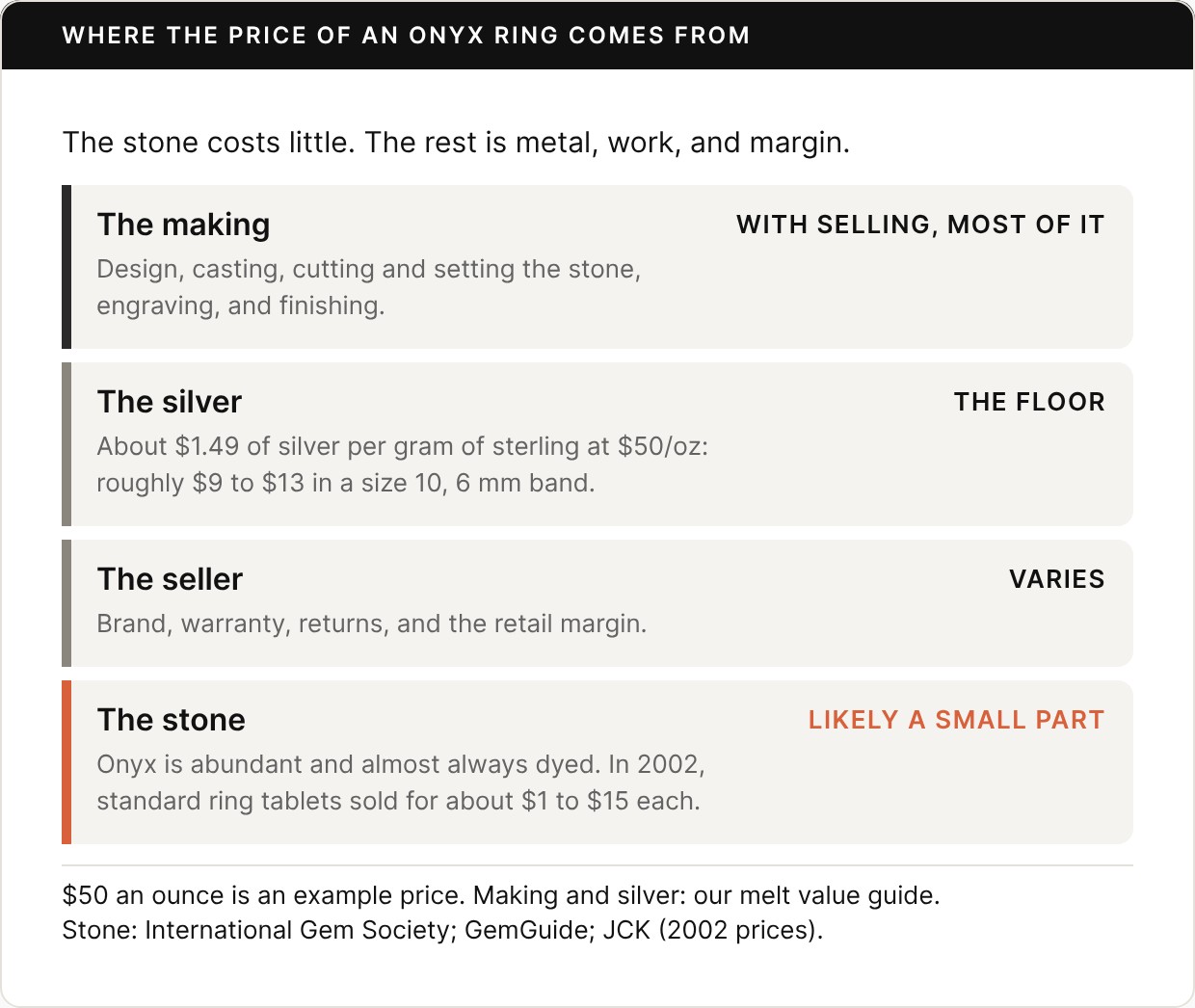
- The making. Designing the ring, casting it, cutting and setting the stone, engraving, and finishing. Together with selling it, the making is most of what you pay for in a silver ring, as our guide to what sterling silver is worth explains.
- The silver. A solid 925 band holds real metal: at an example price of $50 an ounce, a gram of sterling contains about $1.49 of silver, so a size 10, 6 mm band holds roughly $9 to $13, as the same guide works out. That value is a floor under the price, not the price.
- The setting. A frame around the stone protects its edges best; prongs show more of the stone but leave the edges between them uncovered, as our black onyx rings guide explains. Neither costs much in material, but a well-fitted setting takes skill.
- The stone’s size and cut. A large, faceted stone needs more cutting than a small, smooth one, and a design with many small onyx accents needs more setting work.
- The seller. Brand, warranty, returns, and the retail margin. “Silver jewelry and flatware usually sell for more because of workmanship and the dealer’s margin,” as MetalCharts puts it.
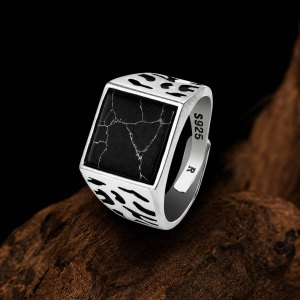
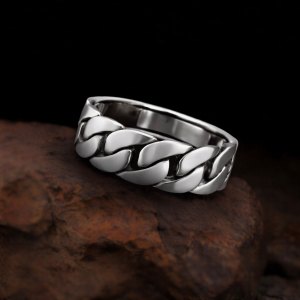
One brand’s price list is consistent with that. On October 30, 2026, Ronatelli listed its four black onyx statement rings at $149 to $169 and its four all-silver bands at $129 to $149, with no ring on sale; its two signets set with small onyx stones were $129 and $139, and its Marmo signet, with a veined black stone Ronatelli doesn’t name, was $129. All are 925 sterling silver. The Ragnar, a faceted onyx in a square frame, was $149, the same as the Kleos, an all-silver band with a Greek key pattern, and the Arco, with a large faceted onyx and onyx accents, was the most expensive at $169. Within one brand’s prices, the stone moves the price little. Our comparison of all eleven covers each ring.
The same logic likely applies at the expensive end of the market. An onyx ring set in gold or platinum, or with diamonds, or made by a well-known jeweler, is priced on the metal, the diamonds, the maker, and the design. The exception is a stone that is itself carved or custom cut: for a carving, Roskin writes, the price “depends on the artist’s conception of its value.”
What a well-made onyx ring looks like
Since the stones themselves differ little, the differences you can see are in how the stone was finished and set, and in the silver around it.
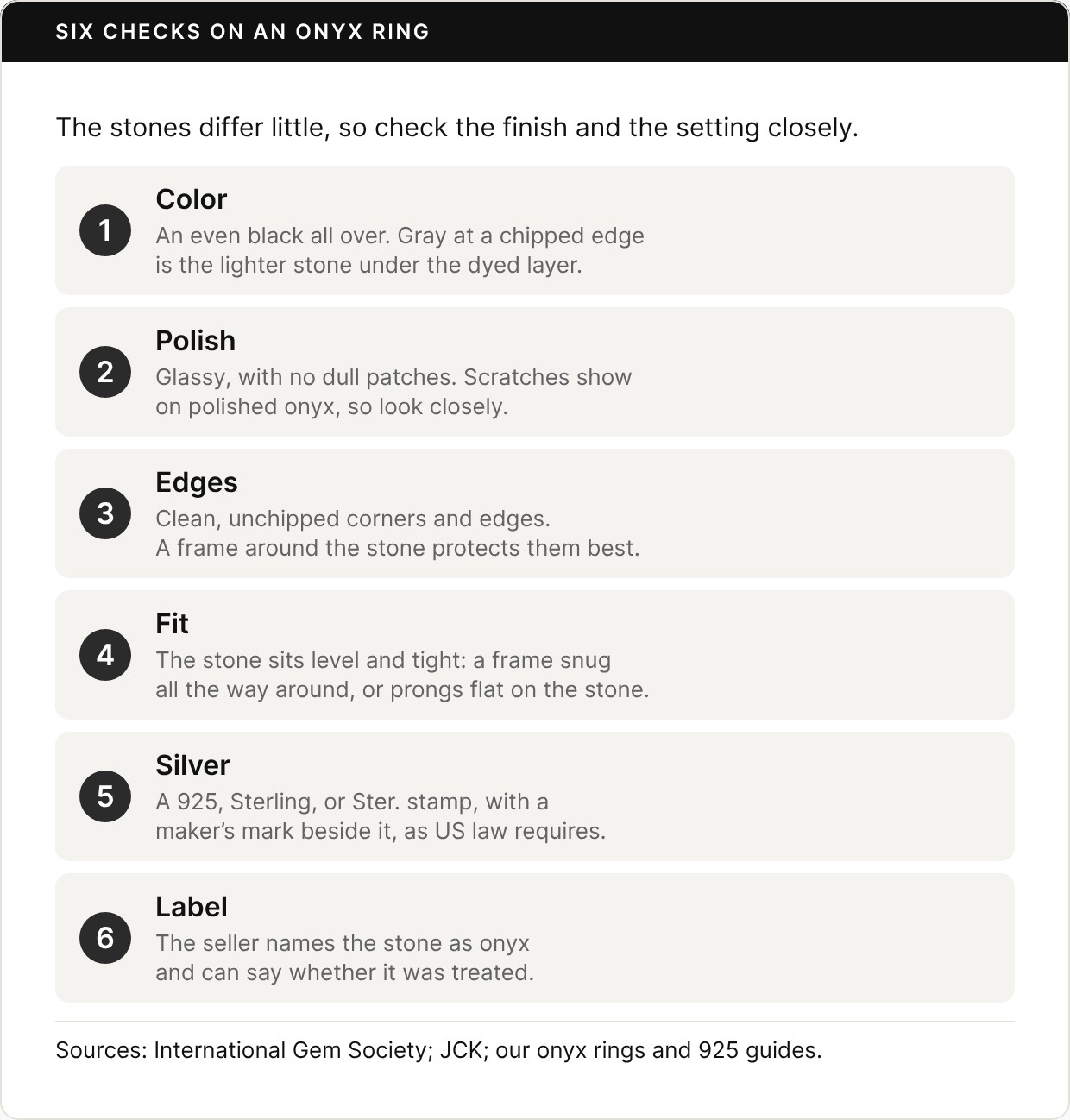
- An even black. A dyed stone should be black all over, and the IGS lists “uniform color” and a “vitreous polish luster” among the signs of real onyx. Gray showing at a chipped edge means you are seeing past the dyed layer.
- A glassy polish. Onyx takes a high polish, and Roskin notes that polished onyx “scratches fairly easily and the scratches are noticeable,” so look for dull patches and fine scratches on a new ring.
- Clean edges and corners. Chips start at an exposed corner or edge, which is why a frame protects the stone best, as our onyx rings guide notes.
- A stone that sits tight. A frame should sit tight against the stone all the way around, and prongs should lie flat on it, as the same guide advises.
- A stamped 925 band. Look for 925, Sterling, or Ster. with a maker’s mark beside it, as US law requires; our guide to telling if silver is real covers what else to check.
- A named stone. A good seller says the stone is onyx, and can tell you whether it was treated. If you are unsure it is onyx at all, our guide to black onyx vs. obsidian, jet, and glass shows the checks.
What an onyx ring is worth once you own it
Less than you paid. A buyer who melts jewelry pays for the silver, and only part of its melt value, while the onyx adds nothing, since its weight isn’t silver, so a scrap offer for an onyx ring will be a fraction of its retail price. Sold to a private buyer as secondhand jewelry, a ring you no longer wear may fetch more than its melt value, though usually less than it cost new, as our melt value guide explains.
That is the honest case for an onyx ring: it is an affordable way to wear a striking black stone in solid silver, and with care it keeps its looks. Keep the cloth off the stone, take it off for the gym, and see our onyx rings guide for how to clean it. For the silver around the stone, our guide to getting scratches out of a silver ring covers stone-set rings.
FAQ
Is black onyx expensive?
No. Onyx is abundant and almost all black onyx is dyed chalcedony, so the stone is inexpensive; in 2002, JCK reported standard ring tablets at about $1 to $15 apiece. The price of an onyx ring comes mostly from the making and the seller’s margin, with the silver as a floor.
How much is a black onyx ring worth?
As metal, the value of its silver: about $1.49 a gram of sterling at an example price of $50 an ounce, and a scrap buyer pays only part of that. As jewelry, what a buyer will pay for the design and condition, which is usually less than the price new.
Is natural black onyx more valuable than dyed?
Possibly, but you are unlikely to face the choice. Naturally black onyx thick enough to cut as a solid color is rare, according to the International Gem Society, almost all onyx sold is dyed, and none of our sources prices untreated black onyx separately. Unless a lab report says a stone is untreated, assume it is dyed.
Does dyed onyx fade?
Usually not. The sugar-and-acid treatment leaves carbon in the stone, and Roskin calls it “a penetrating and permanent process.” Organic dyes are another matter: Roskin notes their colors may fade in direct sunlight, and the IGS says extended exposure to strong sunlight may gradually fade dyed stones. The black may also go only a few millimeters deep, so a deep chip or heavy repolishing can show lighter stone.
Is black onyx a good investment?
No. Buy an onyx ring because you like wearing it. Resold, it is worth its silver or its value as secondhand jewelry, usually less than you paid.
Why do some onyx rings cost much more than others?
Because of what surrounds the stone: gold or platinum instead of silver, diamonds, a well-known maker, or a more complex design and setting. The onyx itself varies little, unless it is carved or custom cut, where the carver’s work sets the price.
How can I tell if my onyx is real?
Not reliably at home; black glass, plastic, and obsidian can look the same. Our guide to telling onyx from obsidian, jet, and glass covers the checks that rule things out, and a gemologist can confirm it.
Bottom line
Black onyx isn’t a valuable gemstone: it is abundant, almost always dyed, and inexpensive. An onyx ring’s price comes mostly from the making and the seller’s margin, with the silver as a floor, and the finish, the setting, and the metal are what to judge. Choose an even black stone with a glassy polish, clean edges, and a tight setting, in a stamped 925 band, and buy it to wear rather than as an investment.
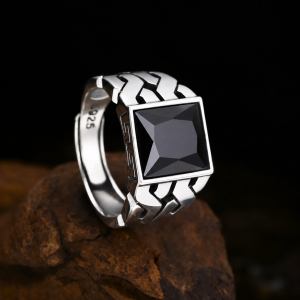
From the collection
Men’s sterling silver rings by Ronatelli
Eleven handmade 925 rings, $129 to $169, from a chain-link band to a black onyx statement ring. Every one is adjustable.
Related guides
Ronatelli’s prices were read from ronatelli.com on October 30, 2026, and may have changed since. Onyx’s abundance, dyeing, treatment depth, sunlight fading, rarity of natural black, and the signs of real onyx follow the International Gem Society’s black onyx page; the share of dyed onyx follows Çiğdem Lüle’s “Chalcedony: A Common yet Diverse Gemstone” in GemGuide’s Gem Focus (February 2021); 2002 tablet prices, permanence of the sugar-and-acid treatment, fading of organic dyes, carving prices, and scratching follow Gary Roskin’s “Black Chalcedony” in JCK (June 1, 2002). The dealer’s margin follows MetalCharts. Silver value, workmanship, and resale follow our melt value guide; settings, FTC disclosure, and care follow our black onyx rings guide. Read our editorial policy.

