Yes. Sterling silver is 92.5% pure silver, so every solid piece has real metal value, though usually less than people expect. At an example price of $50 per troy ounce, a gram of sterling holds about $1.49 of silver: roughly $9 to $13 in a size 10, 6 mm men’s band and $45 to $74 in a 22-inch, 5 mm curb chain. A buyer who melts it down will typically pay 70 to 85 percent of that. What a piece is worth as jewelry is a separate question, and it is the reason a silver ring costs far more than its metal, and why scrap is rarely the best way to sell a piece someone could still wear.
Key takeaways
- The formula: grams × 0.925 ÷ 31.1 × the silver price per troy ounce. That is the melt value: the metal value of a solid sterling piece, and the most a scrap buyer will pay.
- About $1.49 a gram at $50 silver. The silver price moves every day, so check it before you calculate.
- Scrap buyers pay less than melt. Typically 70 to 85 percent, sometimes more, because the silver still has to be refined, tested, and resold.
- Plated, weighted, and “German” silver aren’t worth melt by their full weight. Plating is a thin layer, weighted pieces are partly filler, and nickel silver contains no silver at all.
- Some pieces are worth more as jewelry. Have designer, vintage, and collectible pieces appraised before you sell them by weight.
In this guide The formula What pieces hold Buyer offers Why rings cost more Worth more Not worth melt How to sell FAQ
How to work out melt value
Melt value is what the silver in a piece would be worth if it were melted down and sold at the day’s price. For sterling it takes three steps, and all you need is a kitchen or jewelry scale, ideally one that reads to 0.1 gram, since a 1-gram error matters on a light ring.
- Weigh it in grams and multiply by 0.925, the share of pure silver in sterling, to get the grams of silver.
- Divide by 31.1 to convert to troy ounces. Precious metals are priced in troy ounces, and one troy ounce is exactly 31.1034768 grams, according to the LBMA, which sets standards for the London bullion market. An ordinary ounce is lighter, at about 28.35 grams.
- Multiply by the silver price per troy ounce. The result is the melt value.
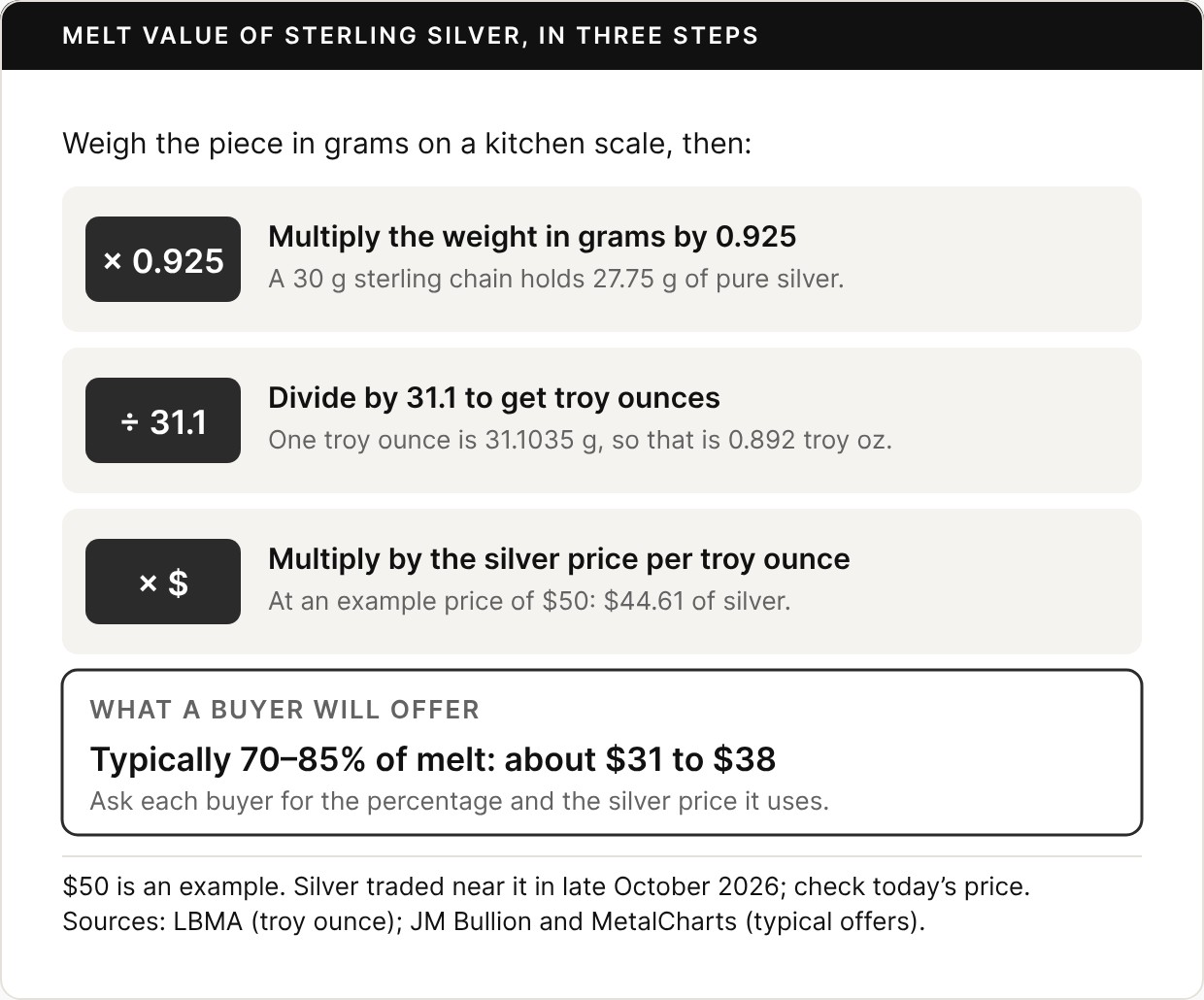
The price is the moving part. Silver is quoted all through the trading day; on October 30, 2026, it was around $50 an ounce, with MetalCharts showing $51.50. This guide uses a round $50 as an example; for a real calculation, use the price on the day you sell. At $50, each gram of sterling holds about $1.49 of silver.
The same formula works for other silver standards; only the purity changes: 0.999 for fine silver, 0.958 for the UK’s Britannia silver, 0.900 for coin silver, and 0.800 for an older continental standard, as our guide to what 925 means lists. Some buyers quote by the pennyweight (dwt) rather than the gram. There are 20 pennyweights in a troy ounce, the LBMA notes, so one pennyweight is about 1.555 grams.
What common pieces hold in silver
Using the typical weights of solid sterling in our ring, chain, bracelet, and Cuban chain guides, here is what the silver is worth at $50 an ounce.
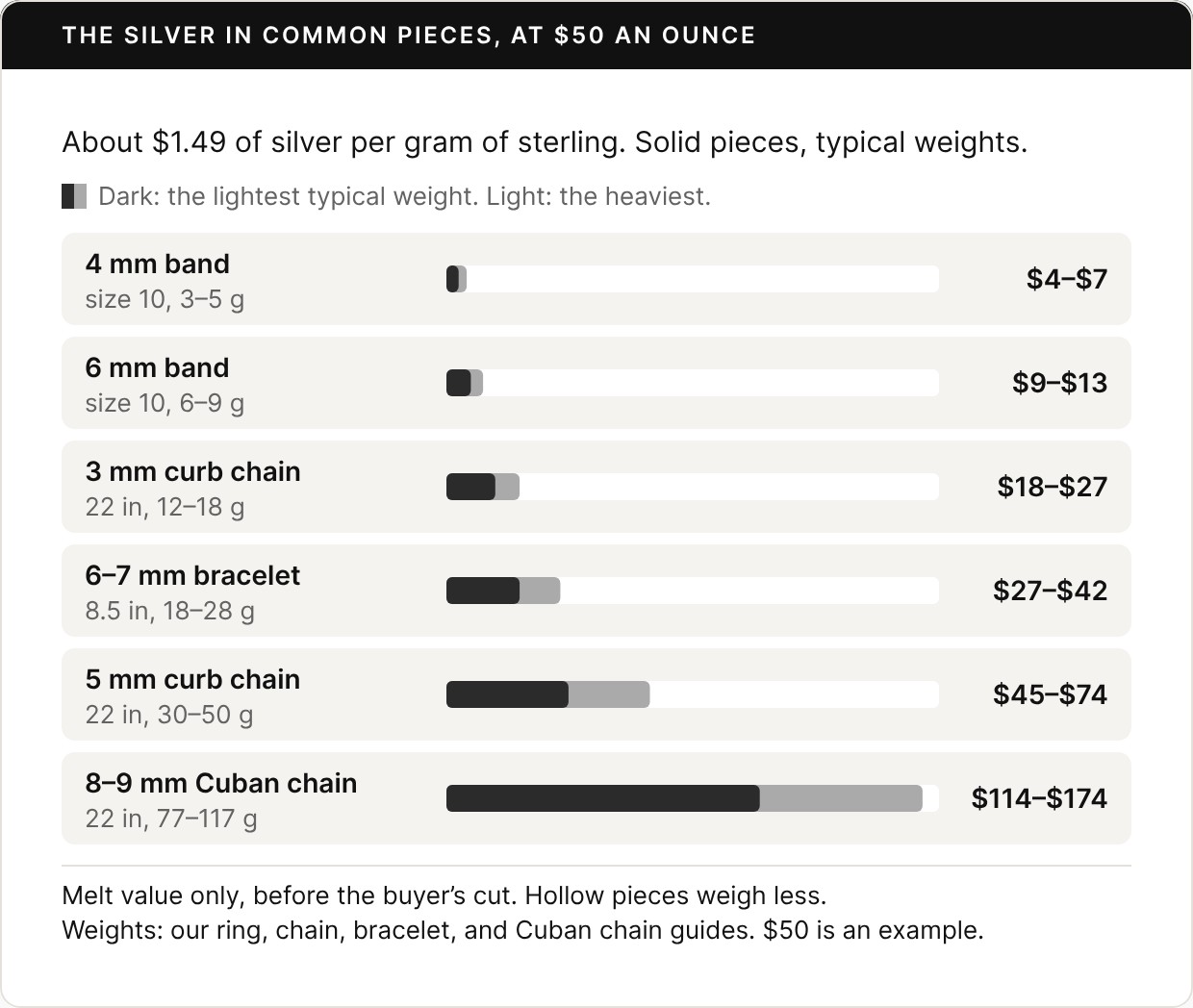
Hollow chains and thin bands weigh much less than these solid ranges, which is why weight is the number to check when you buy as well as when you sell. Parts that aren’t silver, such as steel knife blades, weighted bases, and plastic handles on flatware, should be separated before weighing so the weight reflects only the silver, MetalCharts advises, and APMEX suggests removing any stones or charms you want to keep.
Why buyers pay less than melt
Melt value is not what you will be paid. A buyer who melts sterling sends it to a refiner, which charges for melting, assaying, and recovering the silver; the buyer also covers testing, handling, and shipping, keeps a margin, and carries the risk that silver falls before the lot is settled, as MetalCharts explains. Because silver is worth little per gram, those costs take a bigger share than they do with gold.
Published guides put typical offers for sterling jewelry and flatware at 70 to 80 percent of melt (JM Bullion), and MetalCharts says refiners typically pay 70 to 85 percent for sterling flatware, though its sterling price page gives 80 to 95 percent for scrap buyers. Local coin shops, jewelry stores, and pawn shops tend to offer much less than specialized bullion dealers, because they must cover overhead and their own margin, according to APMEX, itself a bullion dealer that buys sterling. Refiners also prefer larger lots, of several pounds or more, MetalCharts notes.
So for a 30-gram chain with about $45 of silver in it, expect an offer of roughly $31 to $38. Before you accept, ask the buyer which percentage of melt they pay and which silver price it is based on, as MetalCharts recommends.
Why a silver ring costs far more than its metal
If a 6 mm band holds $9 to $13 of silver, why does a well-made one cost so much more? Because most of what you pay for is the making: designing the piece, casting or forging it, finishing and polishing it, setting any stones, and selling it. “Silver jewelry and flatware usually sell for more because of workmanship and the dealer’s margin,” as MetalCharts puts it. It is also why silver and gold rings differ less in price than their metals do; our comparison of sterling silver and white gold works through the numbers.
For a buyer, the practical point is that metal value is a floor, not a fair price. Judge a silver ring on its weight, its finish, and how it is made, as our ring buying guide explains.
When sterling is worth more than melt
Some pieces are worth more as objects than as metal. Flatware in a pattern people collect and pieces by well-known makers such as Tiffany, Georg Jensen, or Gorham can sell well above melt, MetalCharts notes, and APMEX suggests private resale for pieces with collectible value, a desirable maker, or a sought-after pattern, though it takes more time and work. Have those appraised before you send anything to a refiner, and don’t over-polish antiques, which APMEX says can sometimes reduce their appeal.
A ring or chain you simply no longer wear sits in between. Sold as secondhand jewelry, it may fetch more than its melt value from a private buyer, though usually less than it cost new.
What isn’t worth melt value
- Silver plate. A thin layer of silver over a base metal, often marked EP, EPNS, A1, or “plate.” It has much less metal value, though it may still have decorative or resale value, according to APMEX.
- Weighted sterling. Weighted candlesticks, knife handles, and some decorative pieces contain filler such as resin or cement, and knives have steel blades, so the gross weight isn’t the silver weight (APMEX).
- “German” or nickel silver. An alloy of copper, nickel, and zinc with no silver in it at all, as our 925 guide notes; our German silver guide explains how to tell it from sterling.
- Anything you can’t confirm. A buyer will test a piece without a reliable mark; you can check it first with our guide to telling if silver is real.
How to sell sterling silver for the best price
- Confirm what you have. Look for 925, .925, or Sterling, and check anything unmarked or suspect with our silver testing guide.
- Sort it. Separate solid sterling from plated, weighted, and possibly collectible pieces, and remove any stones or charms you want to keep, as APMEX suggests.
- Weigh and calculate. Weigh the sterling in grams and work out its melt value at the day’s price, so you know the most a scrap buyer could pay before anyone makes an offer.
- Get several quotes. Compare a local shop with an online or mail-in dealer, and ask each for the percentage of melt and the silver price behind the offer.
- Sell the good pieces as jewelry. Have designer, vintage, and collectible pieces appraised, and sell them to people who will wear or collect them rather than by weight.
There’s no need to polish everything first. A light cleaning is fine, but tarnish usually doesn’t stop a buyer from testing or appraising silver, according to APMEX; our guide to cleaning sterling silver covers the gentle way to do it.
FAQ
How much is 925 silver worth per gram?
Multiply 0.925 by the silver price per troy ounce and divide by 31.1. At $50 an ounce that is about $1.49 a gram; at $40, about $1.19; at $60, about $1.78. Use the price on the day you sell, and expect a buyer to pay part of that.
Is a 925 ring worth anything?
Yes, the silver in it: a typical 6 mm men’s band holds about $9 to $13 at $50 silver, and a scrap buyer typically pays 70 to 85 percent of that. As jewelry, sold to a private buyer, it may be worth more.
Will a pawn shop buy sterling silver?
Many will, but local shops and pawn shops tend to offer much less than specialized bullion dealers because of their overhead and margin, according to APMEX. Ask what percentage of melt they pay and compare it with other offers.
Does sterling silver hold its value?
Its metal value follows the silver price, which rises and falls. What doesn’t carry over is the workmanship you paid for at retail: sold for scrap, a piece brings only part of its melt value.
Is silver-plated jewelry worth anything?
Very little as metal, because the silver layer is thin. Plated pieces may still have decorative or resale value, according to APMEX.
What does dwt mean when selling silver?
Pennyweight, a unit of troy weight. There are 20 pennyweights in a troy ounce, so one pennyweight is about 1.555 grams.
Should I clean silver before selling it?
A light clean is fine but not necessary: tarnish usually doesn’t stop a buyer from testing silver, and heavy polishing can sometimes reduce the appeal of antiques, according to APMEX.
Bottom line
Sterling silver always has metal value: grams × 0.925 ÷ 31.1 × the day’s price, or about $1.49 a gram at $50 an ounce. Expect a scrap buyer to pay 70 to 85 percent of that. Plated and weighted pieces are worth far less, collectible and designer pieces can be worth far more, and a piece you still enjoy wearing is usually worth more to you than its metal.
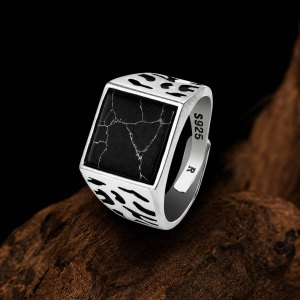
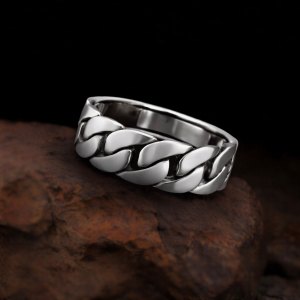
From the collection
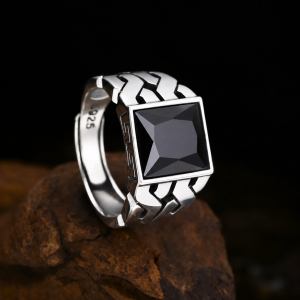
Men’s sterling silver rings by Ronatelli
Eleven handmade 925 rings, $129 to $169, from a chain-link band to a black onyx statement ring. Every one is adjustable.
Related guides
This guide is general information, not financial advice. The troy ounce and pennyweight follow the LBMA. Typical offers follow JM Bullion’s “How to Value Your Silver Before Selling” and MetalCharts’ guides to where to sell silver, scrap silver prices, and the sterling silver price; selling tips and plated and weighted pieces follow APMEX’s “How to Sell Sterling Silver.” Silver prices are MetalCharts’ figures for October 30, 2026, and $50 is an example price, not a live quote. Piece weights are the typical solid-sterling ranges from our ring, chain, bracelet, and Cuban chain guides. Read our editorial policy.

