Mostly, yes. Standard sterling silver is 92.5% silver, with the rest almost always copper, and neither metal is a common cause of skin allergy. The American Academy of Dermatology, the Mayo Clinic, and DermNet all list sterling silver among the metals people with a nickel allergy can wear. Two caveats keep it from being a blanket yes. “Hypoallergenic” has no official definition in the US, so the word on a label proves little by itself. And a 925 stamp claims the silver content and says nothing about the rest: a low-cost alloy, a plating layer, or a fake can bring nickel along. This guide explains what each metal in a sterling ring does to skin, how to check a ring for nickel at home, and what to do if one already bothers you.
Key takeaways
- Silver and copper are rarely the problem. Allergy to silver appears to be rare, and a review in Contact Dermatitis calls copper “a very weak sensitizer.”
- Nickel is. The American Academy of Dermatology estimates that more than 18% of people in North America are allergic to it, and a review in Cutis calls jewelry the most common source of exposure.
- 925 doesn’t mean nickel-free. The stamp claims the silver content only; a low-cost alloy, a plating layer, or a fake can add nickel.
- A ring rash is often not an allergy. Soap and sweat trapped under the band are a common cause, and keeping the ring and your skin clean and dry is the first fix to try.
- You can check. A dimethylglyoxime (DMG) spot test turns pink when nickel comes off a metal, and a dermatologist’s patch test shows what you’re allergic to.
In this guide What it means Metal by metal Where nickel comes from Allergy or irritation? Check for nickel If you react Other metals FAQ
What “hypoallergenic” actually means
Hypoallergenic means less likely to cause an allergic reaction. It doesn’t mean no one will react, and in the US no rule says how much less likely a product has to be. “There are no Federal standards or definitions that govern the use of the term ‘hypoallergenic,’” the FDA says of cosmetics. “The term means whatever a particular company wants it to mean.” Jewelry is no better covered: the FTC’s Jewelry Guides, which cover words like sterling and vermeil, don’t define it.
In practice, the word points at nickel. DermNet advises looking for jewelry that is “hypoallergenic, i.e. made of stainless steel, at least 18-karat gold, sterling silver, or polycarbonate plastic,” and the American Academy of Dermatology advises wearing only jewelry that is “nickel-free, hypoallergenic, or made from metals such as surgical-grade stainless steel, 18-, 22-, or 24-karat yellow gold, pure sterling silver, or platinum.” The Mayo Clinic’s list of jewelry metals to look for includes “sterling silver,” too. So the useful question about a ring isn’t whether its label says hypoallergenic. It is whether the metal releases nickel against your skin.
Where the law does step in, it regulates nickel, not the word. The European Union limits how much nickel can come off jewelry worn against the skin, finger rings included, to 0.5 micrograms per square centimeter per week, and to less than 0.2 for posts that go through a piercing, under entry 27 of its REACH regulation. A coating only counts if it keeps the release under the limit for at least two years of normal use. “Nickel regulation has been adopted in Europe, but similar legislation does not exist in the United States,” a 2021 review in Cutis noted, so in the US, how much nickel a ring releases is left to whoever made it.
Silver, copper, and nickel: what each does to skin
Sterling is a recipe: 925 parts silver per 1,000, with the other 75 almost always copper, as our guide to what 925 means explains. Here is how skin takes each ingredient, and the one that isn’t supposed to be there.
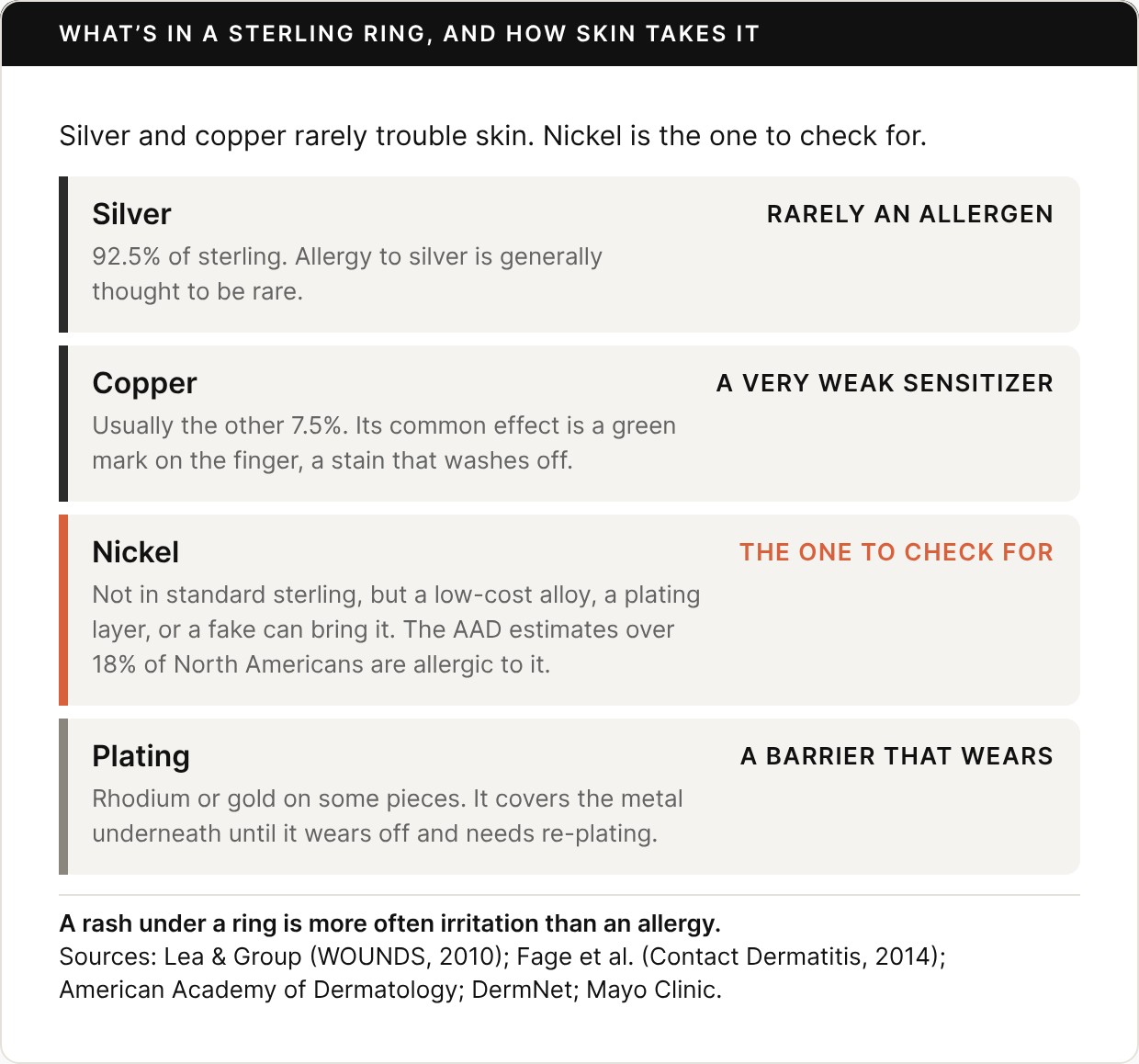
Silver. Contact dermatitis from silver is “generally thought to be a rare occurrence,” according to a 2010 review in WOUNDS, which looked at silver because of its use in wound dressings, though its authors add that some cases may be missed because silver isn’t commonly thought of as an allergen. DermNet says the same of jewelry: allergy to metals other than nickel and cobalt is possible, “however, it appears to be rare,” and “many people who believe that they are allergic to gold or silver jewellery are allergic to nickel.” Mayo Clinic dermatologist Dawn Davis ranks the culprits this way: “Nickel is the more common metal allergy, followed secondly by gold.”
Copper. Allergic reactions to copper “are only infrequently reported,” notes a 2014 review in Contact Dermatitis, which concluded that copper is “a very weak sensitizer as compared with other metal compounds,” though in a few cases it does cause real allergic reactions. What copper does more often is stain: sweat, salt, and soap under a band can turn a little of it into green compounds that leave a faint line on the finger. That mark is harmless and washes off, as our guide to whether sterling turns your finger green explains. It isn’t a sign of allergy.
Nickel. This is the one that matters. The AAD estimates that more than 18 percent of people in North America are allergic to nickel. In the North American Contact Dermatitis Group’s 2015–2016 data on patients referred for patch testing, 17.5% reacted to it, and the Cutis review calls jewelry “the most common source of nickel exposure.” In a general-population study in five European countries, 14.5% of adults tested positive for nickel on a patch test, and piercings were linked to higher rates: 27.6% among people with three or more current piercings, against 6.4% among those never pierced, according to the EDEN Fragrance Study. Men are affected less often; women have a higher rate, “probably because they are more likely to have piercings,” the Mayo Clinic notes. A reaction “usually begins within a couple of days after contact with nickel,” Mayo adds, and it may spread out from the point of contact.
Where nickel comes from in a “925” ring
Standard sterling is silver and copper, and most quality sterling jewelry is nickel-free. But the FTC’s Jewelry Guides treat “sterling” as metal that is “at least 925/1,000ths pure silver” and say nothing about the other 7.5%. That leaves three ways nickel can end up against your skin.
- The alloy. “In some cases of sterling silver, a small percentage of other metals may be in the mix so traces of nickel may be present,” DermNet notes, and some low-cost alloys use nickel or zinc in the mix, as our 925 guide explains.
- The plating. Some silver is plated with rhodium for a brighter white or with gold for color. Plating shields you from what is underneath only while it lasts: DermNet suggests asking a jeweler about plating a ring that causes a reaction in a non-allergic metal such as rhodium, but warns that “the coating will eventually wear off and need re-plating.” Gold-plated silver can also hide nickel in the middle. The FTC’s guidance on vermeil mentions sterling “covered with a base metal (such as nickel) plated with gold,” which shouldn’t be called vermeil unless that layer is disclosed, and the Cutis review advises people with a nickel allergy to avoid gold-plated jewelry, “as the plating can wear off and expose a possibly nickel-containing base.”
- A fake. A ring sold as silver may not be sterling at all. German silver, also called nickel silver, is 5 to 35 percent nickel and contains no silver, as our German silver guide explains. “925 plated” on a listing means base metal under a silver coat, one of the red flags in our silver testing guide, and DermNet notes that silver-plated jewelry is a base metal that “may contain nickel.” A rash from a ring stamped 925 can be the first sign that it isn’t what it claims.
Allergy or irritation?
Before blaming the metal, rule out the band. Most wedding-ring rashes aren’t allergies, a Mayo Clinic report explains: if you don’t wash properly under the ring, Dr. Davis says, “you can get an irritant contact dermatitis.” Soap, sweat, and dirt build up under the band and irritate the skin, as our guide to ring rashes and green fingers explains, and DermNet adds that “irritant reactions are more common in people that suffer from sensitive skin or atopic dermatitis.” So the first thing to try is keeping the ring and the skin under it clean and dry. If that doesn’t help, talk to a health care provider.
A nickel allergy is an itchy rash where the metal touches the skin, usually starting within a couple of days of contact, according to the Mayo Clinic. Nickel is also in belt buckles and the metal on clothing, such as zippers and clasps, the Cutis review notes, so a history of rashes from those points the same way.
How to check a ring for nickel
You don’t need a lab. These checks run from the listing to the dermatologist’s office.
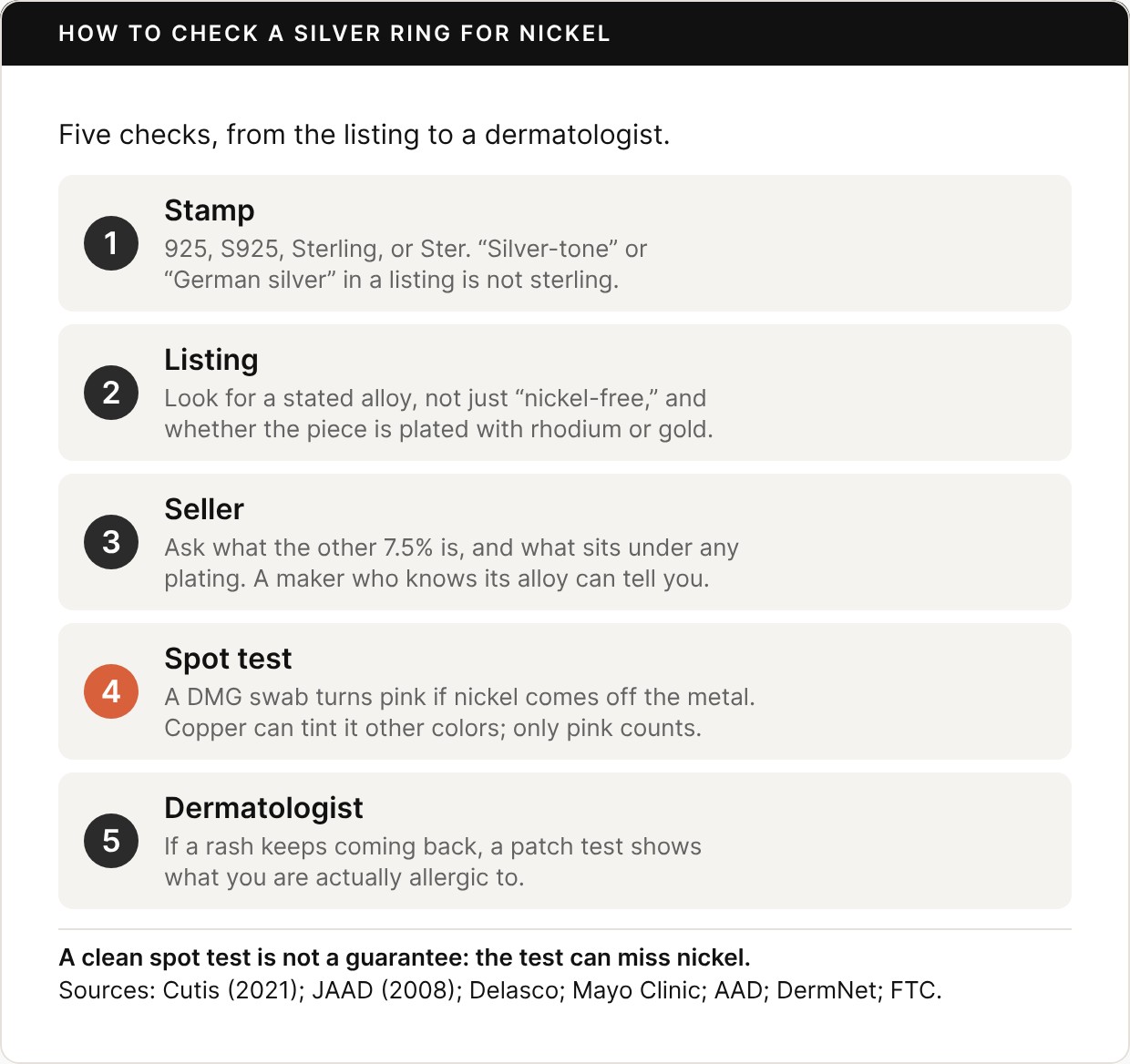
- Read the stamp. Sterling is marked 925, .925, S925, Sterling, or Ster., and US law requires whoever applies that mark to put a trademark next to it, as our 925 guide explains. “Silver-tone” or “German silver” in a listing means the piece isn’t sterling, and “silver” in the title with only “alloy” or “metal” in the specifications is a warning sign, as our testing guide explains.
- Read the listing. Look for a stated alloy and for any plating: rhodium-plated, gold-plated, or vermeil. “Nickel-free” is a seller’s claim, like “hypoallergenic,” and it means most when the seller can name the alloy behind it. Plating changes what touches your skin, both now and once it wears.
- Ask the seller. Ask what the other 7.5% is and what sits under any plating. A maker who knows its alloy can answer in a sentence, and jewelry sold in the EU also has to meet the nickel-release limit.
- Spot-test it. The dimethylglyoxime (DMG) nickel spot test is “inexpensive, rapid, and easy-to-use,” and “a pink color indicates nickel release,” according to the Cutis review. A few drops of the solution go on a cotton swab, which you rub firmly on the metal. Try it on the inside of the band: the instructions for Delasco’s spot test advise testing an inconspicuous spot, since the solution may change the finish of some metals. Kits are sold online, and DermNet suggests asking a dermatologist or pharmacist. On sterling, only pink counts: other metal ions, such as copper, can tint the swab other colors, Delasco warns. And a clean result isn’t a guarantee: the test “may lead to both false-positive and false-negative results,” the authors of a 2008 study of earrings sold in San Francisco wrote.
- See a dermatologist. If a rash “blisters, becomes infected, or comes and goes,” the AAD advises seeing a board-certified dermatologist. A patch test, in which a little of each metal is placed in small disks on your back, shows which ones you react to, as Dr. Davis explains.
If a silver ring already bothers you
- Take it off and let the skin settle. Wash the area with a gentle soap and dry it well. To soothe it at home, Dr. Davis says, “You may also try some low-strength, over-the-counter hydrocortisone cream once or twice a day.” If it isn’t getting better with nonprescription treatment, see a health professional, the Mayo Clinic advises, and go right away if it looks infected, with swelling, warmth, pus, or pain. A rash that blisters or keeps coming back is one for a board-certified dermatologist.
- Clean the ring and keep it dry. If the cause is irritation, this is the first fix to try: wash the ring, dry it and the skin under it after you wash your hands, and let lotion dry before the ring goes back on, as our skin reaction guide explains. Our guide to cleaning sterling silver has the steps.
- Spot-test the ring. If it turns the swab pink, that is a strong sign the ring is releasing nickel, whatever the stamp says, and worth raising with the seller.
- Don’t count on a coating. A clear coat inside the band helps with green marks, as our skin reaction guide explains, and the AAD suggests clear nail polish as a barrier on clothing fasteners such as belt buckles and snaps, though it “will need to be re-applied often.” For nickel, the Cutis authors found tips such as painting nail polish on products “of limited use,” and once a nickel allergy is confirmed, “it is essential to avoid contact with that metal,” DermNet says. Rhodium plating by a jeweler buys time, but it wears off too.
- Or change metals. The table below compares the options dermatologists list.
Sterling vs. other metals for sensitive skin
If nickel is your problem, sterling is one of several metals dermatologists recommend, and some popular alternatives are worse than they sound.
| Metal | For a nickel allergy | Worth knowing |
|---|---|---|
| Sterling silver (925) | For a nickel allergyOn the AAD, Mayo Clinic, and DermNet lists | Worth knowingStandard sterling is silver and copper; buy from makers who state the alloy. The copper can leave a harmless green mark. |
| Titanium | For a nickel allergyOn the Mayo Clinic list | Worth knowingVery light and doesn’t tarnish, but can’t be resized, as our metal comparison explains. |
| Platinum | For a nickel allergyOn the AAD and DermNet lists | Worth knowingA precious metal, priced like one. |
| 18K to 24K yellow gold | For a nickel allergyOn the AAD, Mayo Clinic, and DermNet lists | Worth knowingLower karats “could potentially contain nickel,” the Cutis review warns, and gold allergy exists too: Dr. Davis ranks it second after nickel. |
| Nickel-free white gold | For a nickel allergyOn the Mayo Clinic list | Worth knowingUses palladium or other white metals instead of nickel; ask which alloy, as our white gold guide explains. |
| Standard white gold | For a nickel allergyBest avoided | Worth knowing“White gold should be avoided, as it often contains nickel to contribute to its color,” the Cutis review says. |
| Surgical-grade stainless steel | For a nickel allergyOn the AAD, Mayo Clinic, and DermNet lists | Worth knowingIt does contain nickel; most people never notice, but a minority react, as our metal comparison notes. |
| Gold-plated jewelry | For a nickel allergyBest avoided | Worth knowingThe Cutis review advises avoiding it, “as the plating can wear off and expose a possibly nickel-containing base.” |
| Silver-plated base metal | For a nickel allergyAvoid | Worth knowingA base metal that “may contain nickel” under a thin layer of silver, DermNet notes. |
| German (nickel) silver | For a nickel allergyAvoid | Worth knowing5 to 35 percent nickel and no silver, as our German silver guide explains. |
For most men, the choice comes down to sterling or titanium. Our comparison of sterling, steel, and titanium puts titanium first for sensitive skin and nickel-free sterling second, and sterling is the one of the two you can resize, repair, and polish back to new.
FAQ
Is 925 sterling silver hypoallergenic?
For most people, yes. Standard 925 sterling is silver and copper, two metals that rarely cause allergies, and the AAD, the Mayo Clinic, and DermNet list sterling silver among the metals people with a nickel allergy can wear. The 925 stamp doesn’t say what the other 7.5% is, though, so buy from makers who state their alloy.
Can you be allergic to sterling silver?
It is possible but uncommon. Allergy to silver appears to be rare, and copper is a very weak sensitizer, though it can cause allergic reactions in a few cases. A reaction to a sterling ring is more often irritation from soap and sweat under the band, or nickel from an alloy, a plating layer, or a ring that isn’t really sterling; DermNet notes that many people who believe they are allergic to silver jewelry are allergic to nickel. A dermatologist’s patch test can tell you which.
Does sterling silver contain nickel?
Standard sterling doesn’t: it is silver alloyed with copper. But the 925 standard sets only the silver content, and DermNet notes that traces of nickel may be present in some sterling when other metals are in the mix. A DMG spot test shows whether a ring releases nickel.
Is sterling silver good for sensitive skin?
It is one of the better choices. Sterling is on the dermatologists’ lists for nickel allergy, and if rings irritate your skin in general, keeping the band clean and the skin under it dry matters more than the metal. DermNet notes that irritant reactions are more common in people with sensitive skin or atopic dermatitis.
Is sterling silver or stainless steel better for a nickel allergy?
Both appear on the AAD and Mayo Clinic lists, but surgical stainless steel contains nickel and quality sterling usually doesn’t. Our comparison of sterling, steel, and titanium puts titanium first for sensitive skin, then nickel-free sterling.
Is rhodium-plated sterling silver hypoallergenic?
While the plating lasts, it is a good choice: rhodium is one of the non-allergic metals DermNet suggests for plating a ring that causes a reaction. But “the coating will eventually wear off and need re-plating,” DermNet notes, and then the metal underneath touches your skin. Ask what is under the plating before you buy.
Does a green finger mean I’m allergic to silver?
No. A green line is copper from the alloy reacting with sweat, salt, or soap, and it washes off. It is a stain, not an allergy. An itchy red rash is a different thing; our green finger guide explains both.
What does a pink spot test mean on a silver ring?
It is a strong sign that nickel is coming off the metal, whatever the stamp says: “a pink color indicates nickel release,” according to the Cutis review. The copper in sterling can tint the swab other colors, but only pink indicates nickel. A clean result is reassuring, though not a guarantee, since the test can miss nickel.
Bottom line
For most people, sterling silver is hypoallergenic in the way that counts: its silver and copper rarely cause allergies, and dermatologists list it among the metals people with a nickel allergy can wear. The word on a label proves little; the alloy does. Buy 925 from a maker who states what the other 7.5% is, be wary of plated and suspiciously cheap “silver,” spot-test anything that makes your skin itch, and if a rash keeps coming back, let a dermatologist’s patch test find the cause.
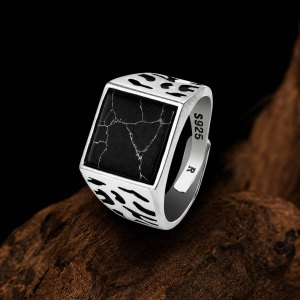
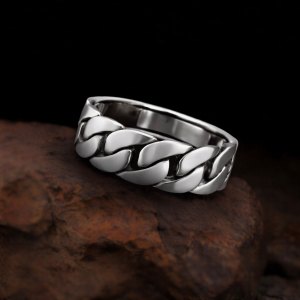
From the collection
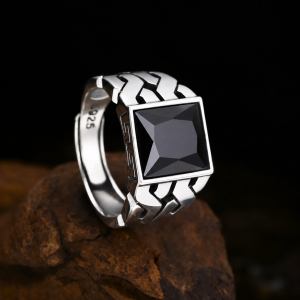
Men’s sterling silver rings by Ronatelli
Eleven handmade 925 rings, $129 to $169, from a chain-link band to a black onyx statement ring. Every one is adjustable.
Related guides
Nickel allergy prevalence, the jewelry list, nail polish on clothing fasteners, and when to see a dermatologist follow the American Academy of Dermatology; reaction timing, spread, sex differences, metals to look for, and when to see a doctor follow the Mayo Clinic’s nickel allergy page; the metal ranking, patch testing, and home care follow Mayo Clinic dermatologist Dawn Davis (Mayo Clinic News Network, 2018), and ring irritation follows her in the Mayo Clinic News Network’s report on wedding-ring rash; jewelry allergy, nickel in sterling and silver plate, plating, irritant reactions, avoidance, and test kits follow DermNet. Patch-test data, US regulation, the spot test, coatings, and metals to avoid follow Moon, Reeder, and Atwater in Cutis (2021); European prevalence and piercings follow the EDEN Fragrance Study (Schuttelaar et al., Contact Dermatitis, 2018); copper follows Fage, Faurschou, and Thyssen (Contact Dermatitis, 2014); silver follows Lea and Group (WOUNDS, 2010); the spot test’s limits follow Thyssen and Maibach (Journal of the American Academy of Dermatology, 2008) and the instructions for Delasco’s DMG spot test. The EU nickel limit is REACH Annex XVII, entry 27; US marking rules are the FTC’s Guides for the Jewelry, Precious Metals, and Pewter Industries, 16 CFR 23.4 and 23.5; “hypoallergenic” on cosmetics follows the FDA. Read our editorial policy.

